Unacceptably Sick Environmental Destruction (USED)


The tides have turned as we approach the strongest predicted hurricane season in the Gulf of Mexico. And with 5000 barrels a day spewing into the ocean with no end in site, it’s sure to be a sickening environmental catastrophe as we helplessly document all the damage to ecosystems and human lives.

We all wag our angry fingers of judgement at BP, the offshore oil drilling regulations, the US government, and even the chemical companies raking in the profits from the toxic chemical dispersants.

So while we are all busy pointing and blaming lets considers that this 5000 gallons per day is only accounting for 2 minutes (yes 120 seconds) of oil consumption in the state of Texas.

As we ponder the magnitude of our planets total oil consumption that finger pointing is shifting from outward… to inward.  The GAS shift (Give-A-Shit shift) is finally happening.  Regular people are hitting the wall of realization that we are the primary cause of this…WE are the the consumer of all this oil.

It is no longer acceptable to waste energy.  Big vehicles, flaunting excess, and luxury homes are now being viewed with distain by many and the fingers are starting to point at each other.

Anyone who now chooses to hop on a plane for their “deserved” vacation after witnessing this catastrophe is now the subject of finger pointing.  We have all been ignorant of the hidden consequences of our actions in the past and we have to accept that, but seeing what is happening in the Gulf of Mexico now, there is absolutely no excuse for selfish indulgence at the expense of everything else.

With this “Oh Shit” moment also comes the power.  The power to not waste, the power to vacation locally, the power to eat local food, the power to help create stronger communities, the power to help others make the GAS Shift, the power to force our governments to shift to sustainable energy, the power to live better.

Do you feel Powerful or USED?

Eco-Sense article in Harrowsmith Magazine


Harrowsmith Magazine is out with an article on our Eco-Sense home.  Online link to Harrowsmith only has the table of contents…may need to buy the magazine to read full article or check out this PDF  Harrowsmith June 2010 issue

Front cover text: “Greenest House on Vancouver Island”.

One of a Kind
Another in our occasional installments on alternative building materials, here we take a tour of a cob house, probably the most ambitious of its kind in Canada. By Tom Cruickshank

Spring 2010 – A quick update from Ann and Gord


As usual, we have been trying to cram too much fun into everyday and we never seem to have time for our passionate updates.  Everyday there is so much we want to share, but we find we seldom have time for more than a quick facebook post.  So here it is…a very quick update with lots of  links and photos.

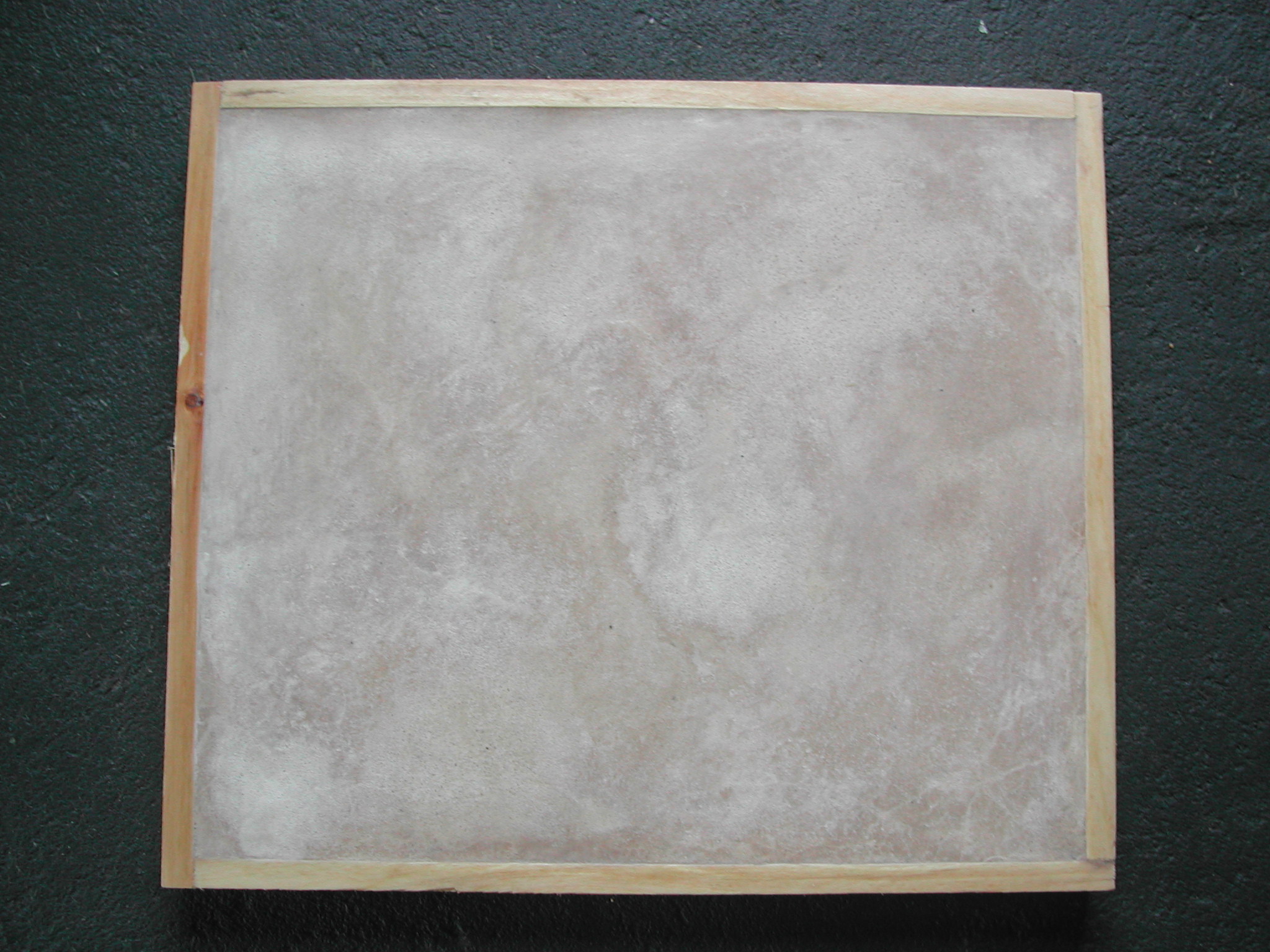
Earthen Counter Sample

Tours: 3 public tours coming up this summer.  June 6th, July 4th, and August 8th.  Click here for details.  Cost $20 and all tours 10am to noon.

Workshops: 3 one day courses here at Eco-Sense: Grey water; Earthen Floors and Counters; and Natural Plaster.  Click here for full details.

Media:

  • The Harrowsmith article on Eco-Sense is due out for the May/June 2010 issue.
  • Documentary “Powerful” by David Chernushenko is coming out this Fall.  Eco-Sense is included.

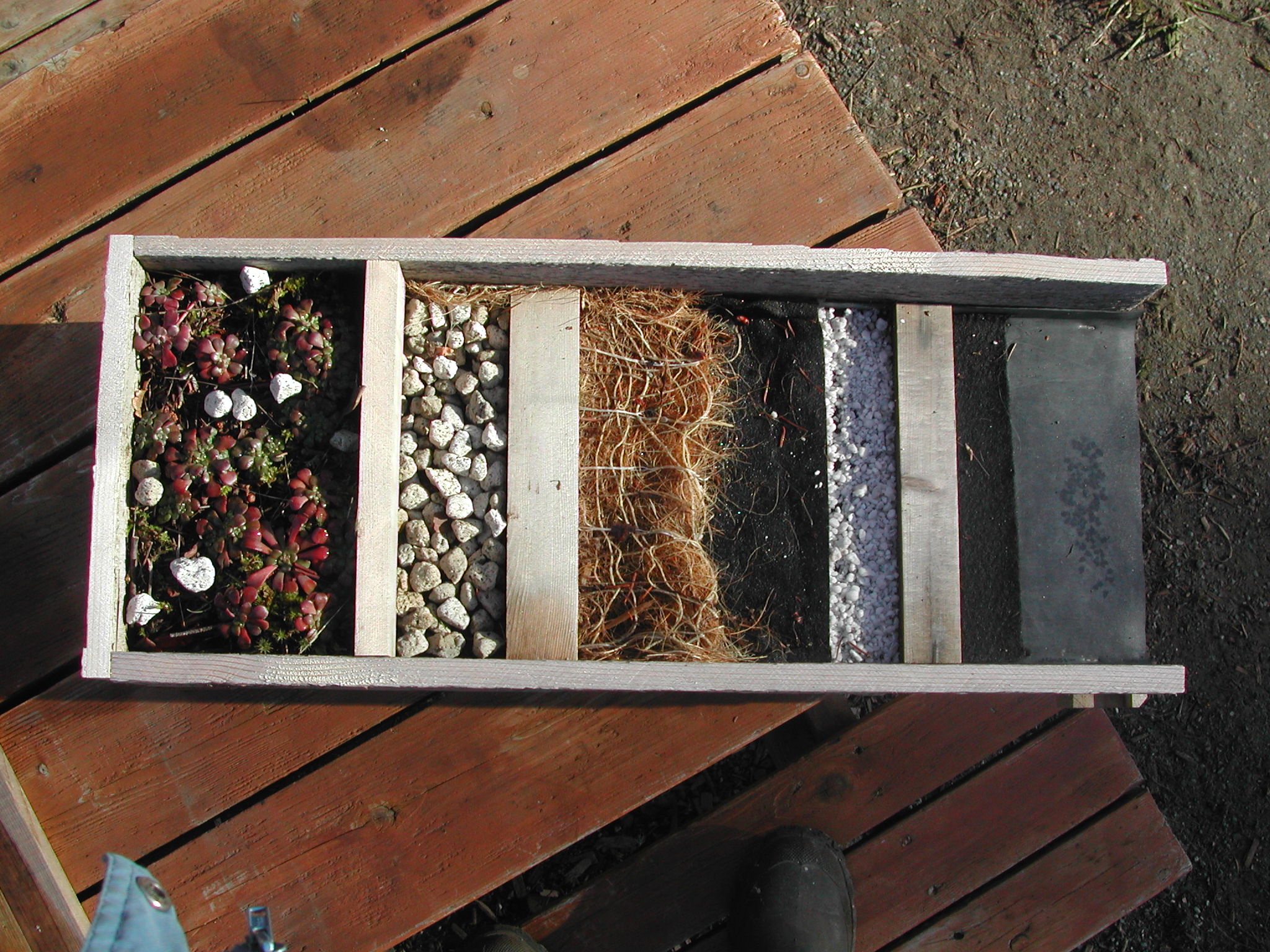
Living roof sample

Saturday (April 17) at CanWest Mall in Langford: Yes, Ann is going to spend the entire day at the mall participating in an Earth Day celebration.  Our Highlands community will have 3 full tables.  Eco-Sense will have our full display out…come on down and say hi.  The Highlands is taking Climate change, rising energy prices, and social sustainability seriously and has produced an exceptional “Sustainability Task Force Report”.  View on line here.

Recent tours: We have hosted recent tours with John Horgan, Andrew Weaver, lots of couples and family hoping to build sustainably, school groups, youth groups, Camosun College technology chairs, and many others.

Ann took our BC Property Assessment to the review board.  In  summary, the eco-sense home was appraised at the fair market which includes all of the sustainable energy systems which comprise 22% of the cost of the home.  This 22% represents our FUTURE energy. Essentially this results in extra municipal taxes (before home owner grant) of $400 per year (or $10,000 in a 25 year period).  We are considering taking this to the next level of the review board and have also written a letter to Premier Gordon Campbell.  The BCSEA is working on a Small Scale Renewable energy Barriers Project that has included municipal taxation.  Three possible solutions have been identified.

Gord and Ann have been doing many different presentations around town.  Gord is also doing some teaching on energy systems with a recent 7 hour presentation to the “Sustainable Building Advisor Program” at UVIC.  Ann is jokingly calling him “Professor Baird”…hehe

Grey Water Friendly Cleaning Products: Still trying to source more eco-friendly cleaning products.  Most brands, even the “green” brands have nasty preservatives in them that the manufactures are reluctant to disclose…they claim that they are in such low concentration that they are not harmful.  Our dish soap claims to be…good for the environment…good for our grey water…or so we thought…it has a REALLY nasty preservative in it…but we are told by the company that it is so little…not to worry. 2-bromo-2-nitropropane-1,3-diol.  When we look it up it rates a 10 on the nasty toxicity rating scale. Should we worry, or is this OK?  Sometimes Ann wishes she didn’t stud organic chemistry..ignorance would be easier…but not safer.

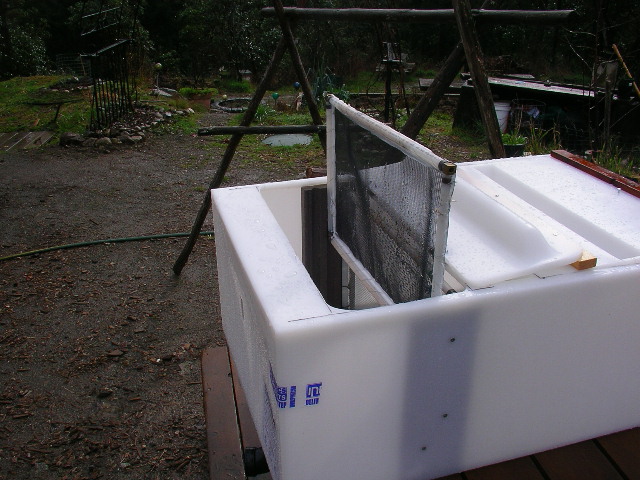
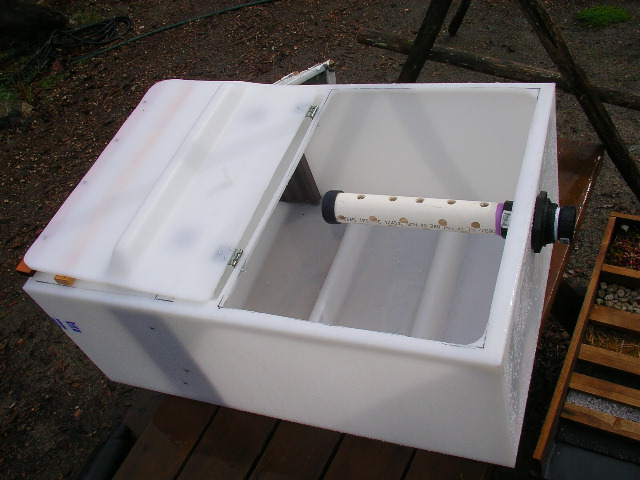
New Grey Water worm filter

New grey water worm filter

Water/worm bin filtration It is ideal to use potassium based soaps which are hard to find in Canada and expensive to ship from the USA.  Too much sodium is also bad for plants.  Oasis is a good brand, and we are trying to find someone to make something similar locally or we may just need to buy a whole case.  Here are a couple links to learn more or to look up specific products.

Grey water irrigation of plum tree

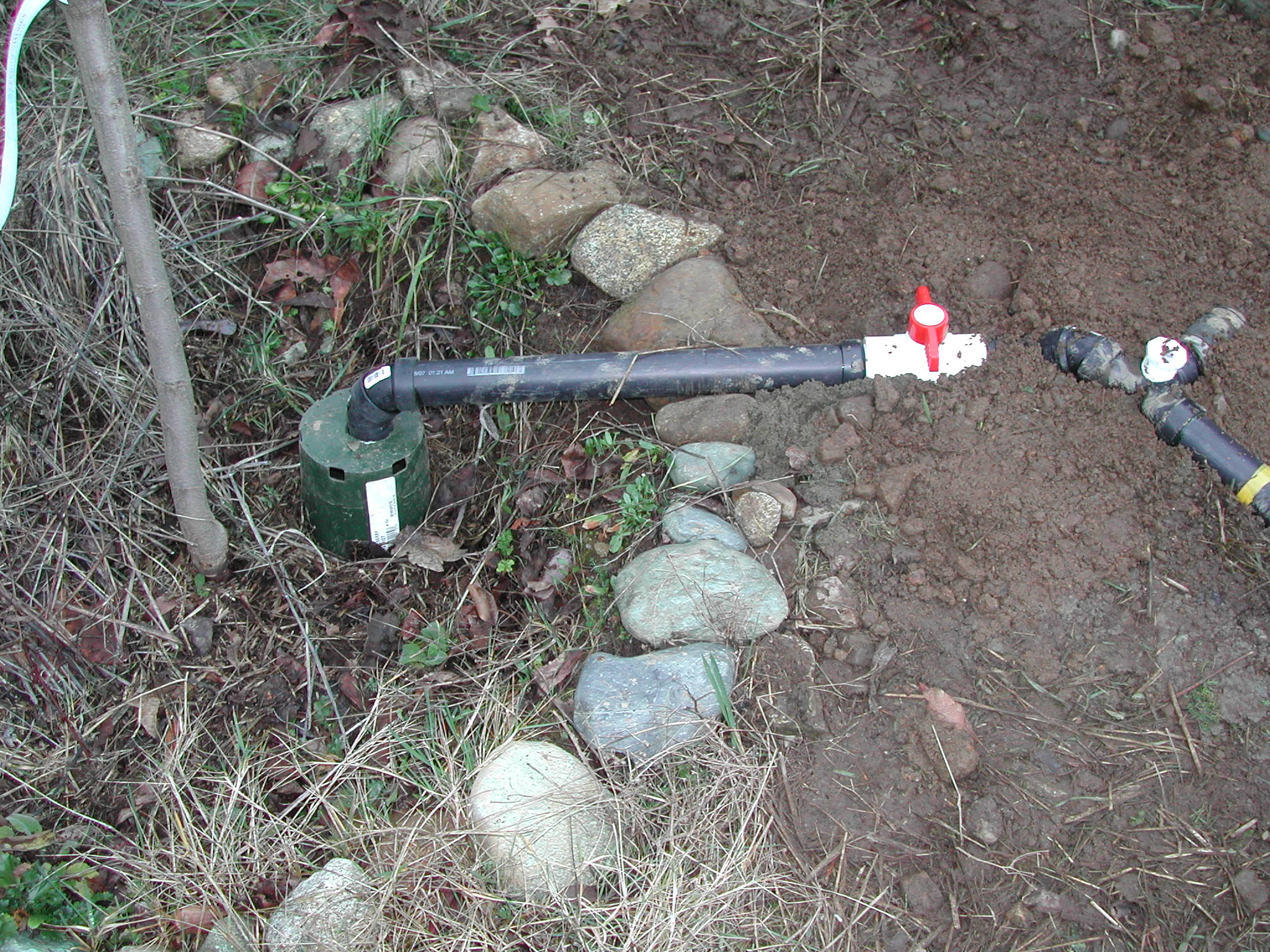
Grey water: Gord has improved the “worm bin” for grey water filtration and we have installed another grey water system from our clothes washer.  Check out our grey water course offered this summer if you would like to learn more.


Chickens, Coops and Chicks: 2010 – the year of the Chicken

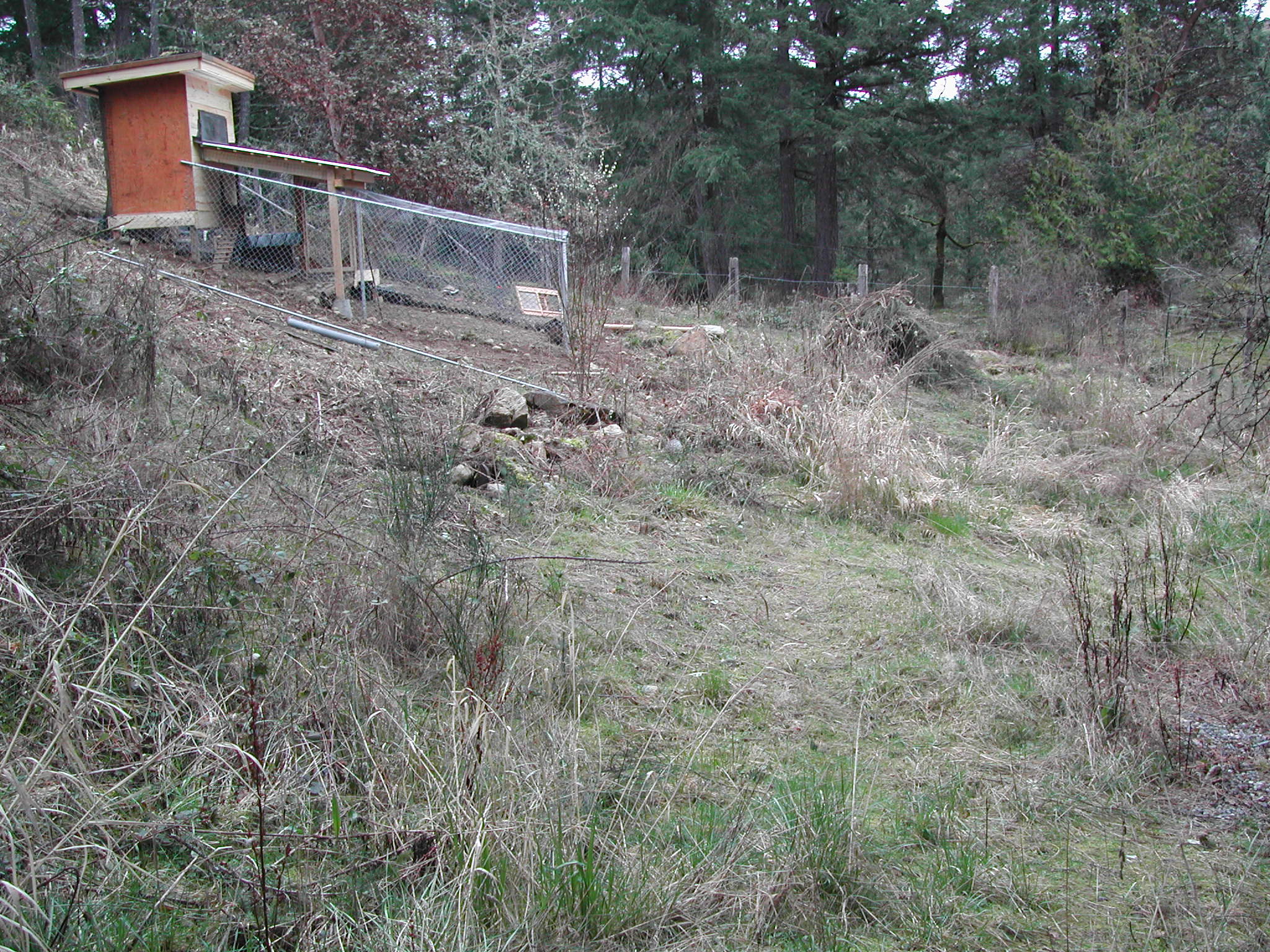
We built a new Luxury chicken house with some new and used materials complete with living roof, and rain water harvesting to keep the chicken water full at all times.  The site we chose was the unused septic field.  We have deer fenced the area, and are planting smaller walnuts, hazelnuts, and fig trees.  The chickens will fertilize the trees, eat the bugs, and the trees will help protect the chickens from the eagles and hawks.  Since there are grey water pipes already down at the septic field we are able to divert the pipes to create another branched drain irrigation system for the fruit and nut trees. The chickens have a small safe yard/ compound and then access to the large septic field area where we can plant some grains (alfalfa, and wheat) to supplement their diet.  Happy chickens, happy nut/fruit trees, and happy us.

Chicken run, we cleared out the broom and blackberries and lots of green growing now.

Chicken run, we cleared out the broom and blackberries and lots of green growing now.

Chicken coop

New Chicken coop

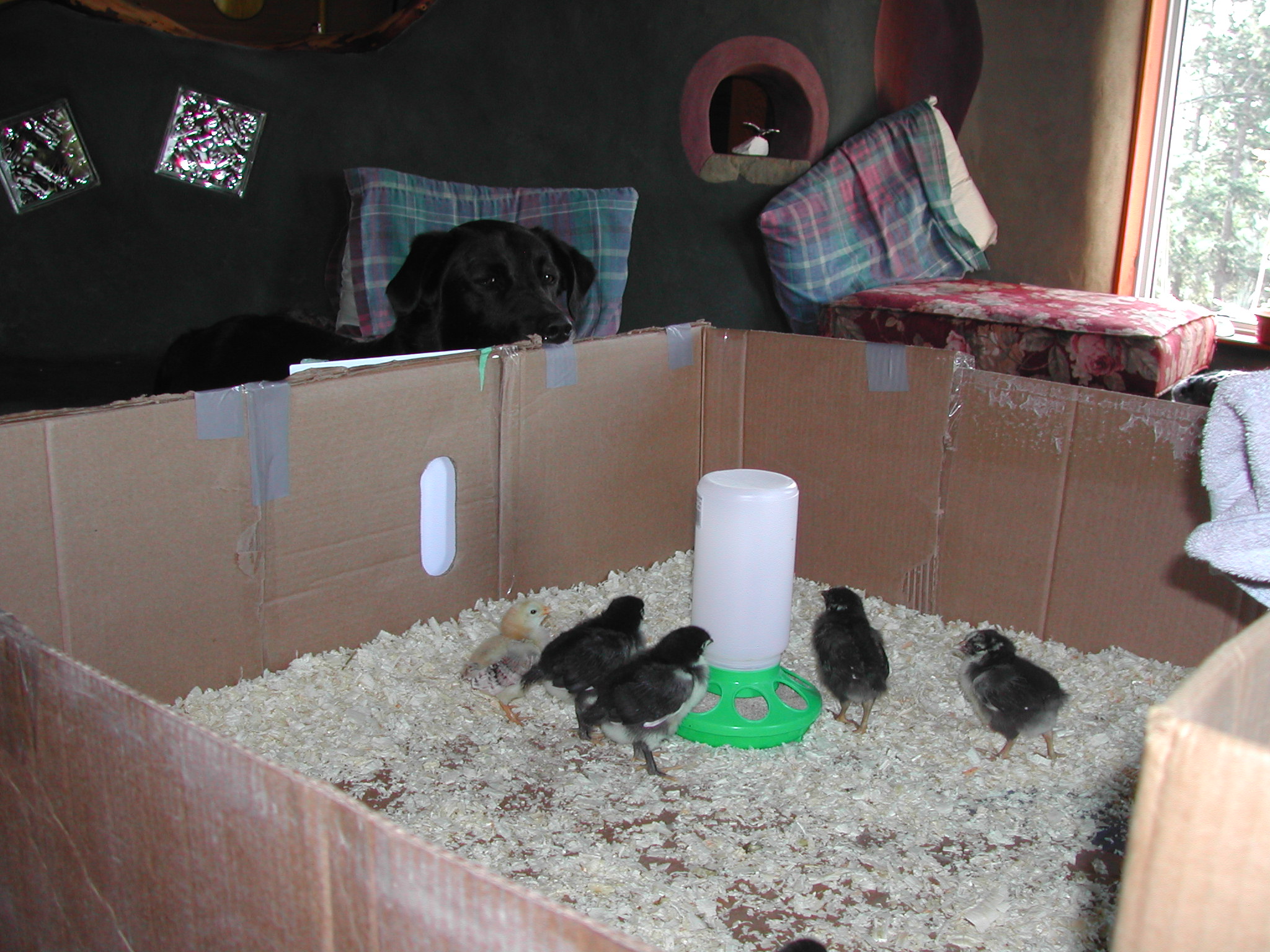
Baby Chickens: We incubated 14 eggs, 8 of which turned out to be fertilized. What a magical experience it was to be a part of such a process right in our own living room.  6 of the little beauty’s hatched and we are hoping for most of them to be hens.  The roosters may end up being dinner as we are not quite vegetarians.  Our family has been preparing ourselves for this experience over the past year.  Not sure how it will go…as we recently watched food inc. and started to cry as the baby chicks went down the conveyor belt.  At 10 days old they are almost flying around the living room…should be interesting for our next tour.  Lots more chicken photos at the end of this post.

2 day old chicks

2 day old chicks

The Living Building Challenge: Eco-Sense has applied for certification and are waiting for Cascadia to accept our $1000 fee (donated by our community) so that our home can be properly assessed.  There will be three other projects assessed at the same time.  Eco-Sense is positioned to score very high but will not score 100%.  Our home is net zero ELECTRICITY; but not net zero ENERGY as we do use propane for cooking.  Combustion is not allowed under The Living Building Challenge…check out this link to read about our conversation with Jason McLennon from Cascadia regarding combustion.

Gord teaching about Solar Hot Water

And Just for the Energy Nerds: Eco-Sense and Cascadia have successfully obtained a grant from Vancity to study the energy and water systems of the home.  This will be a year long study with our engineers to determine how the mass wall system is performing.  This will include various data loggers for the solar hot water, many sensors embedded into the walls, and flow meters for hot water and domestic water consumption.  After the data has been collected there will be lots of report writing to do.  In addition to the reports available for peer review there will be extensive media outreach with Cascadia for systems, policy, earthen architecture, and overall sustainability.  This is truly a remarkable opportunity to learn from and improve upon the successes and challenges the Eco-Sense living laboratory provides.  We very excited about the doors that this data will open for others dreaming of building more sustainably and affordably.

And to sum up, we continue to try and stay positive in spite of some of the gloomiest science spewing the cold hard facts of climate change.  It seems daily that we read something really bad and observe our species continue to rape and pillage this planet in the name of stuff. But for all of these there continues to be the balance of the good news, and the stories of inspiration.  Here are a few links of interest in the many we have come across.

Gord putting the living roof on the cob bathroom

Ann installing the pine ceiling in the new cob bathroom

And finally here a couple photos of the soon to be complete public cob bathroom with composting toilet.  This has been a volunteer project that we are working hard on to get by the summer.

And this was just a small snippet of the last three months…whew…and… oh yeah…been busy planting the garden.  It’s been a wonderful winter eating kale and potatoes, but we are now ready for the new crops of the season and are celebrating every germinating seed.

Freshly hatched

hours old

Chicken TV

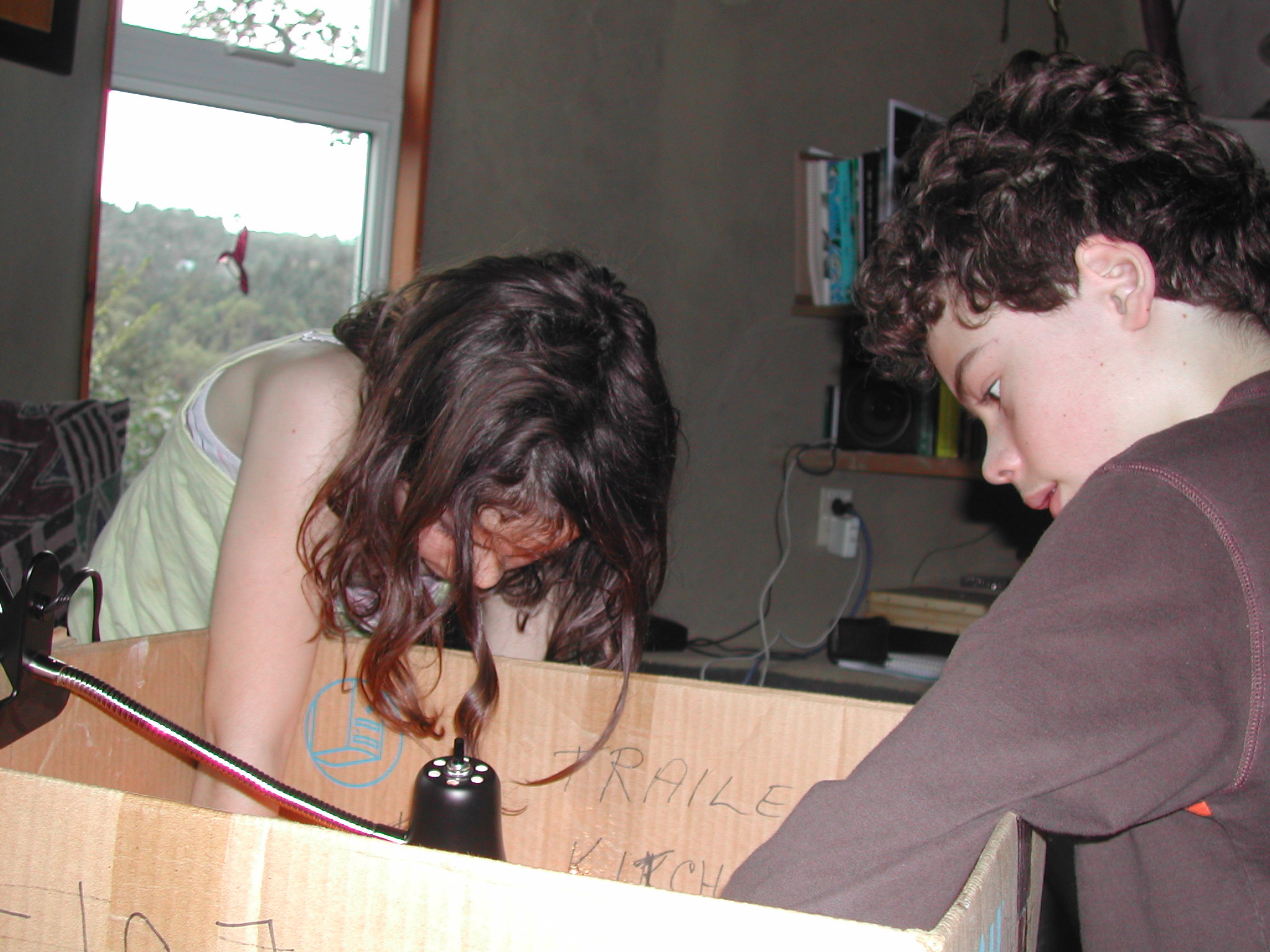
Kids and chickens

Boo (the dog) likes watching too

The Energy Journey…Combustion and “The Living Building Challenge”


Solar PV, Methane, and The Living Building Challenge

Thursday, February 25, 2010 at 9:30am

Our Energy Journey Continues:

Despite our Eco-Sense home using a fraction of the energy of a regular BC home, and our lifestyle choices for conservation, we are still challenged as to how to cook our food sustainably.

We produce the majority of our food onsite, cook from scratch, and process much of our winter food. In this past year we have consumed propane for a total energy of 1890 kWhrs. (two kitchens and 6 family members).

The Living Building Challenge 2.0 does not allow any form of combustion, however Eco-Sense registered for version 1.3 which did allow biogas. But, as we just discovered, this biogas is only allowed for heating/energy production and NOT for cooking. We had planned on designing and building an onsite biogas digester fed from the organic wastes locally available to produce methane for cooking. The fact that thais was not allowed was our misunderstanding.

The standards for the Living Building Challenge (LBC) are indeed hard to reach. This vision is admirable indeed…and hard to achieve, which is the whole point.

Eco-Sense is net zero electricity, but currently is not net zero energy. In order for us to provide the additional 1890 kWhrs from solar PV for electric cooking we would need to install 6.9 new panels. (round up to the nearest two is 8) If we didn’t cook from scratch, and purchased processed foods from elsewhere we would probably need two or three less panels, and if we were only one family we would already be producing enough energy to be totally net zero energy.

Here’s the calculation:

total produced/12 existing solar panels = 195 kWhrs/panel

new energy required – excess already produced = 1351 kWhrs

1351/195 = 6.9 solar panels

So lets explore this to identify the barriers for eco-sense to become truly net zero energy for the purposes of the LBC.

If BC Hydro had a better net metering program, many of the cost barriers would be overcome. BC Hydro is WAY behind as they only pay 8.2 cents per kWhr. Shameful for a province that claims to be leading the way towards sustainability.

Embodied energy (tGHGe produced) to mine, manufacture, and transport the solar PV panels, aluminum frames, and all the other bits and pieces is still VERY high. We compare the solar panels of today to the first computers that came out…they are big, heavy and require lots of stuff to connect up. The future of solar PV is more like a leaf…very small and lightweight.

Currently, we think that producing our own biogas onsite (for cooking) from chicken manure and broom would have a lower carbon footprint – any thoughts on this????

Removal of all the current tax disincentives to solar PV. (Here are a few of them)

  1. HST on solar technologies
  2. building permit fees on entire solar installations
  3. increase in municipal taxation because of property value increases due to BC Assessment of all future energy energy production

Eco-Sense pays an extra $400 per year in municipal taxes because we generate sustainable energy (works out to $10,000 over the 25 year life cycle of the system)

We recently discussed this issue with the BC Assessment appeal board and MLA John Horgan, and everyone agrees that this is wrong. Solution involves changing the Legislation with the BC Minister of Finance.

Education: Require more public pressure to push governments to create meaningful incentives for solar technologies AND support for research to fast track technology.

So, to sum up, It doesn’t look like Eco-Sense will be able to fully meet the Living Building Challenge, but we are are still applying. Our community of the Highlands has chipped in the $1000 registration fee for our home to be assessed for all six categories.

There is much to be learned and contributed from our application to the Living Building Challenge. Let the assessment begin.

Ann and Gord Baird

Friday March 12, 2010

Gord and I had a conversation about COMBUSTION with Jason McLennon who is the CEO of the Cascadia chapter of the US and Canadian Green Building Council.  He is also the lead author of the Living Building Challenge (LBC)…A building system well beyond LEED platinum.  Combustion is not seen as a sustainable option under the Living Building Challenge.  This conversation arose when Gord and I were considering using a biogas digester from waste (broom and goat manure) to produce methane for cooking. Since our Eco-Sense home is a registered Living Building Project this issue of combustion is very important to us. Below is an email conversation I had with Brian (a local mechanical engineer).  We are still thinking about which route to go.

Brian: While nature does not burn fuel to get energy, it does set itself on fire all the time. Forest fires are natural and essential for healthy forest growth. Not to mention volcanoes will decimate hundreds of square kilometres but deposit phosphorous rich ash that improves soil fertility. Both of these processes burn and destroy, but they also revive and renew.

I agree with the desire to mimic the natural world but we don’t yet have the ability do perform perfect Biomimicry; and I fear that this no-combustion rule is letting perfect be the enemy of good.

Ann Baird: Great points Brian. The conversation with Jason went well and we discussed many things including combustion. Here is the summary as I understood it of the LBC reasoning for NO COMBUSTION:

  1. Combustion uses fuel which can change or run out at any time. Since the equipment (infrastructure) has quite an upfront cost it is not likely to be changed if the “green” fuel supply changes. This could lead to perhaps raw wood being used or crops grown to produce the fuel to justify the infrastructure.
  2. Particulates.  Using combustion for cooking or energy production releases other waste gasses and particulates into the home or the community. If everyone was doing this it would lead to reduced air quality in the environment or the home. Ever notice how having a propane stove in the kitchen makes everything in your kitchen slightly sticky over time…some of this comes from the burning of propane. There is also an increased risk of uncontrolled combustion (explosion) occurring from human error…no matter how good the system is engineered. (but in all reality the risk of damages from climate change from doing nothing is much greater and I totally hear your point about perfect being the enemy of good…very wise comment)
  3. What would nature do? This input comes from Biomimicry expert Janine Benyus. Humans are the only species to directly use fire for cooking, heating etc…all other creatures use chemical forms of energy from their environment…ie photosynthesis, etc.

For the LBC, the only exceptions are for laboratory bunsen burners, and possibly in the future the family hearth for cultural purposes…we evolved with fire…but using it to heat our homes is somewhat primitive.

We also chatted about resiliency and how we felt strongly about utilizing simpler technologies.

Although resistive cooking may not be the most efficient (in fact it’s pretty poor), it may ultimately be a better choice…so I think the LBC folks get your point about perfect being the enemy of good.

All in all we had to agree with Jason. We are now thinking about putting a few more solar panels on the roof and setting ourselves up for more solar cooking, but lots to consider.  We had an initial visit with a engineering PHD student from UBC who is interested in working with us to design and build an onsite digester if we go that route.

As far as our wood gassification boiler goes, we are thinking of getting an electric chipper, and pellet maker for converting boom into pellets for the stove. This still wont qualify under the LBC, but all agreed that is a good local solution.

We will be including these comments on the BCSEA at some point and our blog. thanks again Brian for your input.
If they could speak…


I spent the day bringing bad news to the shooting stars…you know those incredibly beautiful delicate spring flowers that thrive in a healthy Garry Oak ecosystem.

They are at their most vulnerable time, having just gone through the winter, pushed their leaves out through the wet earth and leaf litter, with their flower buds just days away from opening in a most amazing display.

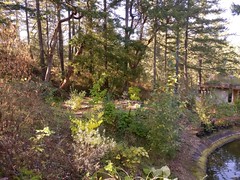
This morning I was out carefully excavating a few native plants for the living roof on the new chicken coop. Plants that have poked through on our few paths that venture into the relatively untouched areas that we share with all the others. The neighbours, good people who we are quite friendly with decided it was time to fix their fence on a point of their land that juts into the land we love and call home. There is no reason for this fence other than to mark their territory.

So the trampling began, with this elderly couple, their three grandsons, and my dad. I tried to respectfully explain that these beautiful flowers were very vulnerable and are part of an endangered ecosystem. No one cared!…the fence needed to be fixed…it was unfortunate they said. I tried to dig some up, while the feet were squishing and twisting around me, but ending up leaving in tears. I went and sat with the chickens; they surrounded me and began to preen their feathers.

I later went back to the damaged site. The flowers spoke to me. They said their leaves were damaged and separated from their bulbs; they were hungry and knew that they would not flower this year to reproduce. They also wondered if they could manage the energy to send out new leaves; they were already tired after working so hard to make their leaves and flowers.

One of the younger smaller and more vulnerable bulbs asked about the possibility of a class action lawsuit to sue for damages. I sadly explained that under our laws they had no rights and could not sue. The elder bulb then spoke up with a wisdom passed down from bulb to bulb over 1,000,000 years and said, “Corporations have rights, why don’t we all get together and form a legal entity so that we have rights, and then we can sue”. We have simple needs for food and water and a tiny bit of land. Initially all the bulbs thought this was a brilliant idea and asked me to help. I sadly had to inform them that Shooting Star bulbs cannot own shares of a corporation. Their species has no value to humans and unless they can figure out a way to convince the entire human population that other forms of life are equal and have rights they will have no future.

I left the bulbs to mull this over and last I heard they are spreading the word underground through an extensive mycelium network. Fungi are the internet of the others. The mycelium have agreed to share resources through a mycorrhizal symbiotic relationship they have with the trees to hopefully give the shooting stars enough food to survive. In the meantime the fungi are spreading the word.

The others are sending out the message to all living creatures that they need to fight back. they will no longer be stepped upon by our excessively heavy footprint.

I have agreed to help them out on the human front, so please let me know when the fungi message has reached the land where you live.

Ann Baird, BSc Biology

Dodecatheon hendersonii (shooting star)