This update is a mind bender. Be prepared to digest connections between knowledge, wisdom, rituals, psychology, the four horsemen, and an economist. No we haven’t gone crazy, we’ve just had some engaging discussions this past while. A true testament to the power of morning coffee, our marriage, and our passionate conversations combining our varied backgrounds in psychology, neuro-psychology, biology, ecology, chemistry, economics, policy, business, and mud house building.
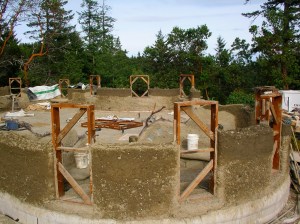
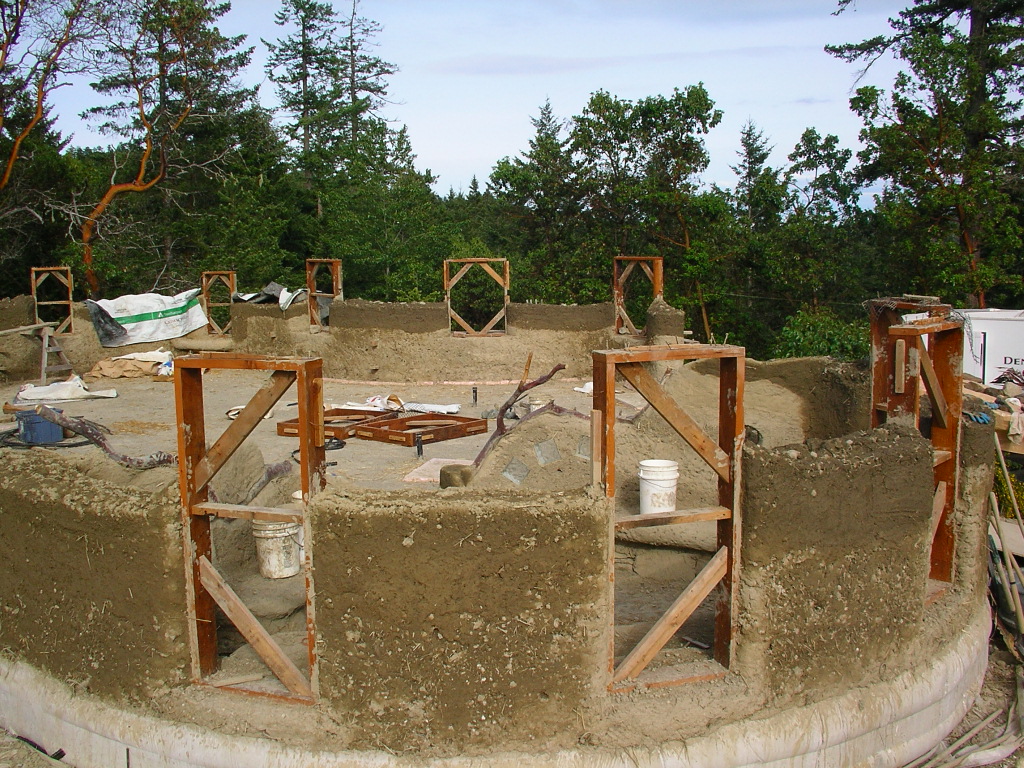
The start of MUD house building
How can it be that those cultures/peoples with less material means can be happier with less stuff than those people who have more than they need? How can it be that countries that have lower GDP economic indicators rank higher on social well-being indicators like the Gross National Happy Index or General Progress Indicators. Ann once tried to introduce HAPI (Highlands Actual Progress Indicator) into a Highlands sustainability Group (it didn’t go over well). The core of this happiness discrepancy, we think, lies in the intersection between many disciplines, inclusive of ecology, psychology, evolutionary biology and history. After all it has been our Eco-Sense platform that less life stuff equates to more lifestyle. Check out this resent article by Derrick Jensen on GDP…it is very good. http://www.orionmagazine.org/index.php/articles/article/6052
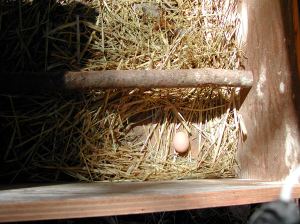
- Our first egg – the BEST egg of our lives
When faced with having just barely enough resources (or money) to cover ones needs, people are more likely to share what little they have; The critical factor here is the comparison to the normals within the culture. The complete opposite is observed in those cultures with excess where greed and selfishness dominate catapulting society into collapse. Ivan Illich denoted in his writings that equality among people was related to the flows of energy and that the more energy and resource flows there were, the greater the inequality between the members of that population. So, in summary it may be the greed and disparity between the haves and the have nots that creates the poverty and the unhappiness. If we ALL shared and had just enough but not too much, we would ALL be happier. Well duh…
This pattern is evident at the personal level, community level and the civilization level.
The personal level
The Chilean economist Manfred Max-Neef brilliantly underscores the above in his wonderment as to why those with less are happier, and why they don’t want what “we” have and that there is a lot less greed for more. As background, Max-Neef decided that rather than rely on the institutional knowledge derived from stats that he would be best to do his research by living within the impoverished community he was studying, and experiencing first hand his research. He describes as an example where he befriends a woman who makes ponchos; she can make two a week by hand to sell to cover her expenses. Max-Neef gives her a simple machine where she can make 20 ponchos per week. When revisited a year later, she has taken to the new machine and loves it, but…she is still only producing two. When asked why, she says she only needs to make two, and says that what she likes is it gives her more time to visit with family and her community. Yup!!! Here is that great interview with Max-Neef. http://www.democracynow.org/2010/11/26/chilean_economist_manfred_max_neef_on
On the opposing end of the spectrum we constantly hear from our friends, family and neighbors, how they never have enough time for the good stuff in life…like time for friends and family, cooking, art, gardening, volunteer groups etc. When they are asked why; it’s often because they have to work…and this answer mostly comes from those that already have the most stuff, the biggest house, and multiple cars. Makes no logical sense.
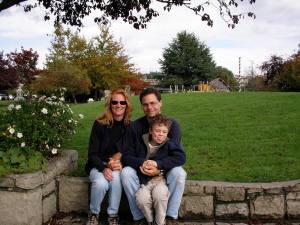
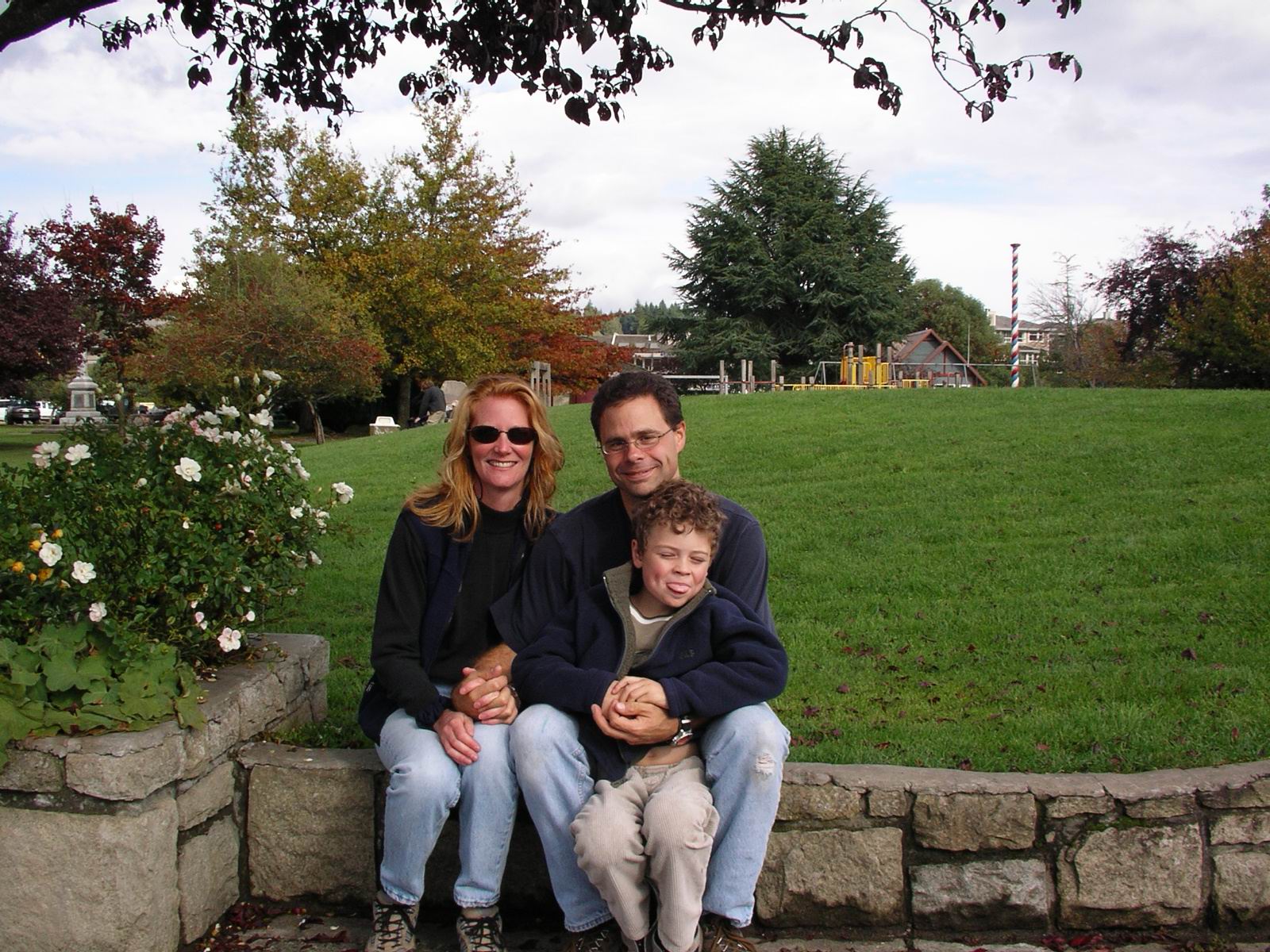
First time Ann met Parker (7), her new son
Civilization Level
History and anthropology show an abundance of examples, where “successful” civilizations repeatedly grow then have an enormous collapse…in numbers of people and economic output. The history speaks to this with the mention of Sumarians, Romans, Aztecs, Mayans, Mesopotamia, the Anasaazi. On the other side those who live as indigenous groups have societies that have outlasted even the most robust wealthy civilizations, were sharing and equality pervade the culture not just between the people but in their relationship with the encompassing natural world as seen with the Penan one of the last hunter gatherer groups (now settled due to industrial logging of their forest home). Here is a Nature of Things documentary on the Penan peoples. http://www.cbc.ca/video/#/Shows/The_Nature_of_Things/The_Adventurers/1242413585/ID=1233753555 It was very interesting to learn how these people live completely in the day and have no words for how old someone is. Also fascinating to experience their sense of belonging to the forest and their incredible connection to other living beings. Watching a Penan woman breast feed a baby monkey was incredibly beautiful. We learn that the human experience and way of being can be so different than our own current experience. Our collective future depends upon actively recreating what it means to be human in a modern context.

First time Ann met Emily (4)...her new daughter
Biology Level
The comparison must be made between the more complex cellular life and that of the more basic. When a virus/bacteria enters into a host that offers a huge resource, the life form goes to town to take advantage of what is available, only to overshoot is resources, and ultimately cause it’s own death.
The forces that act on a cellular level are virtually the same as on the macro human population level. Our population explosion on this planet is much like the cellular organism in that our population responds (grows and shrinks) to match available resources the very same way as single cell organisms do. The only difference being is that in humans, the cells are organized in a fashion that makes a person, and large numbers of persons make a civilization. Just because we are a complex mass of cells doesn’t mean the laws of nature/physics don’t still apply. What if we have actually evolved with the hard wiring to share when our population is in balance with available resources, and express greed when we are out of balance (from either resource excess or extreme resource scarcity). From an evolutionary, sociological, and ecological standpoint this makes good sense; when resources are a bit scarce, we see sharing and co-operation among the population maintain its existence thus achieving a balance with the eco-system and the carrying capacity of the land. Then once excess energy flows are experienced, the “selfish gene” kicks in… selfishness leads to overconsumption and overshoot, then crash! A biological limiting agent for our population. This played out over and over again in all human attempts at civilization…and then came oil. Our very own evolutionary hardwired “control button”… yup, we are wired just like all the other life forms; could it really be that we are biologically predisposed to flourish or collapse in response to our environment’s resource levels? Oil has simply allowed us to go further into overshoot grossly exceeding the carrying capacity of our environment.
So if less is better?
So, if less stuff and money results in more happiness (as long as we have enough for our basic needs), why doesn’t knowledge and facts change our behavior? Very puzzling indeed.
Max-Neef also touches on knowledge and how knowledge alone is useless in understanding; understanding only comes from experience. Experience allows us to feel, and thus engages the more hardwired intuitive decision making centers of our brain. When knowledge and experience/understanding combine, something very powerful occurs and it is called wisdom. The selfish gene does not appear to be controlled by knowledge itself, but a higher level of thinking… wisdom…Wisdom lies where our intellectual capacity for reason combines with love, compassion and empathy. Our culture rarely, if ever, takes the time to fully experience in our gut what we so feverishly study, hence we have a culture that for the most part lacks any depth of understanding and hence is devoid of wisdom.
In our lives in our mud home, we have been lucky to have three things that have facilitated our transition to less life stuff. First off, both of us have been keeners to always learn and process new information. We enjoy thinking and especially new ways to think about old ingrained ideas. Second, we both in our own way experienced a relationship collapse when we were tossed out of our first marriages. We joke that we were both recycled…or up-cycled. But in reality it was a VERY painful time for both of us as we redefined what was important to us; relationships with people, nature, and a different relationship with money. And thirdly, and probably most importantly, we simply do not participate in much of the mainstream culture. By reducing our exposure to the prolific messages from TV, the regular workplace, advertising, stores, malls, movies, etc we are not influenced in a large way by these messages. We are greatly influenced by what we are exposed to but the difference is that we actively choose what we are exposed to based on our desired outcome. Our desired outcome is Less life stuff, More life style and we shape our reality in order to achieve this. This is not a one time shift…it is ongoing and requires a great deal of awareness.
Science and Spirituality
Wars have been fought over this topic. Up front lets define spirituality with a broad brush that covers belief systems of all the lost cultures, and all the present ones. We both grew up without much spiritual influence where science dominated, and all our lives we have set aside the value of spirituality in favour of something more concrete and observable. Currently we find ourselves becoming more interested in conversations about the value of spirituality within the human experience from earlier less commercialized peoples. “If wisdom is derived from combining knowledge with experience and understanding, can wisdom and spirituality co-exist?” “Do spirituality and factual knowledge fill the same void in the human psyche?” As Max-Neef points out it is rare that we can experience what we study, thus we fall into the trap of having knowledge of laws and facts without wisdom.
Spirituality especially as studied within indigenous peoples around the planet, plays an interesting role when there is a data gap to explain an experience. We can begin to get our heads around this idea by observing the Gestalt Theory, a psychologically proven construct which demonstrates that when humans lack information (facts) from their surroundings, they can fill in the gaps. I suspect when we have experiences of our natural world with a void of data we use spirituality to fill those gaps in. Is this so bad? Spirituality based on no knowledge is dangerous, but I would suggest that in combination with the factual knowledge derived from the natural world, a wisdom enhanced with spiritual constructs emerges to provides a paramount wisdom.
We would further argue that the wisdom resulting from the inclusion of spirituality is a richer wisdom as the spiritual component simply adds more heart. This wisdom is more adaptive to sharing and story telling, a lodestar for rituals to be based upon perhaps?
Spirituality also brings with it reverence; a sense a awe and love for those things that are so much greater than the individual. In our November 2010 update we discussed how essential it was to couple our powerful technologies with reverence and justice. https://ecosenseliving.wordpress.com/2010/11/15/november-2010-eco-sense-update/

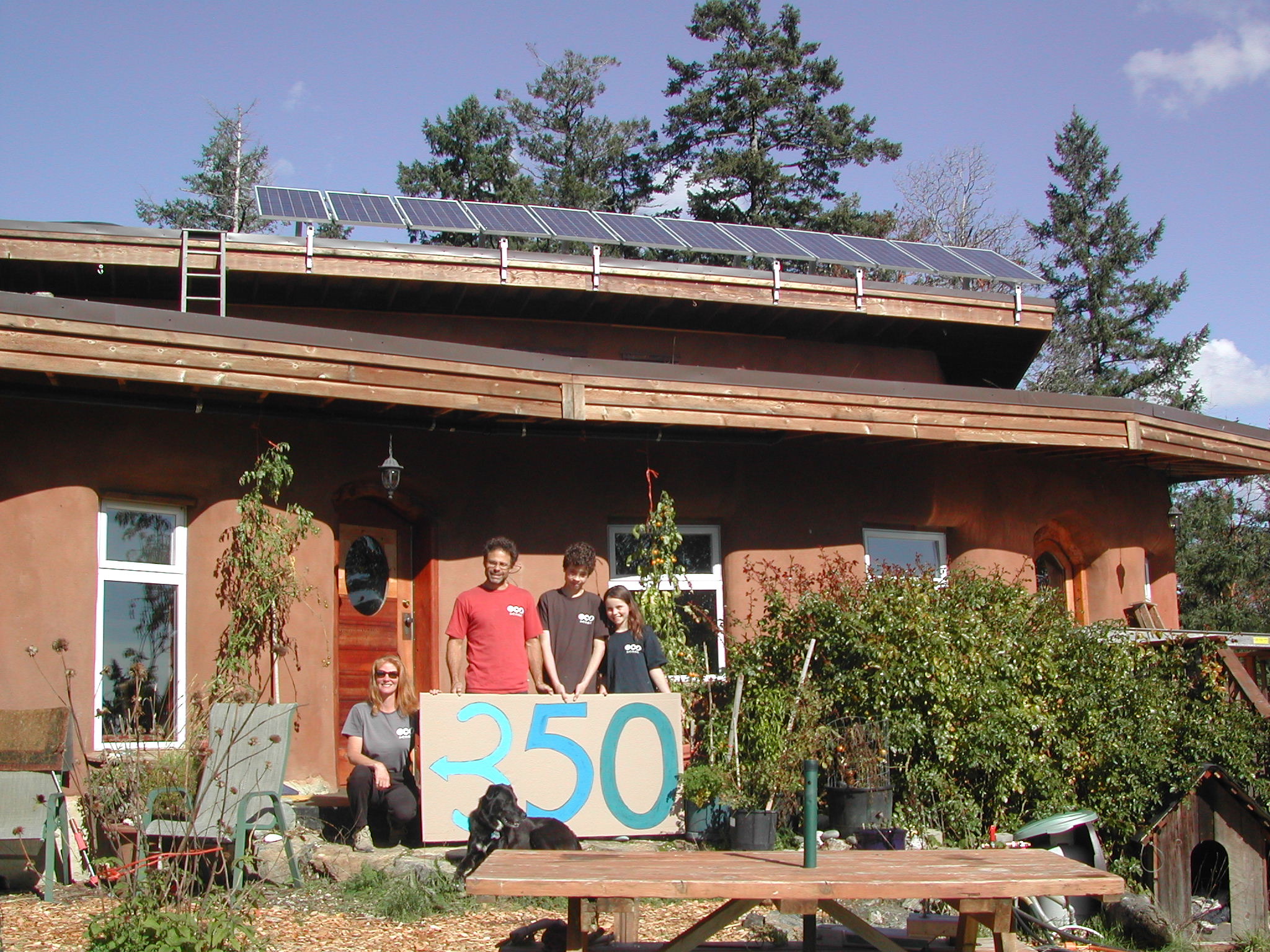
- Solar PV only makes sense to our family as we use 90% less electricity
Yet we are not all wired to tether knowledge to experience, and we are generally arrogant in our spiritualities thinking that one is better than the other. And for those who do not acquire knowledge and experience and come to rely strictly on spirituality to fill the gap of the unknown…. DANGER! (Interpret… SARAH PALLIN).
Change Making
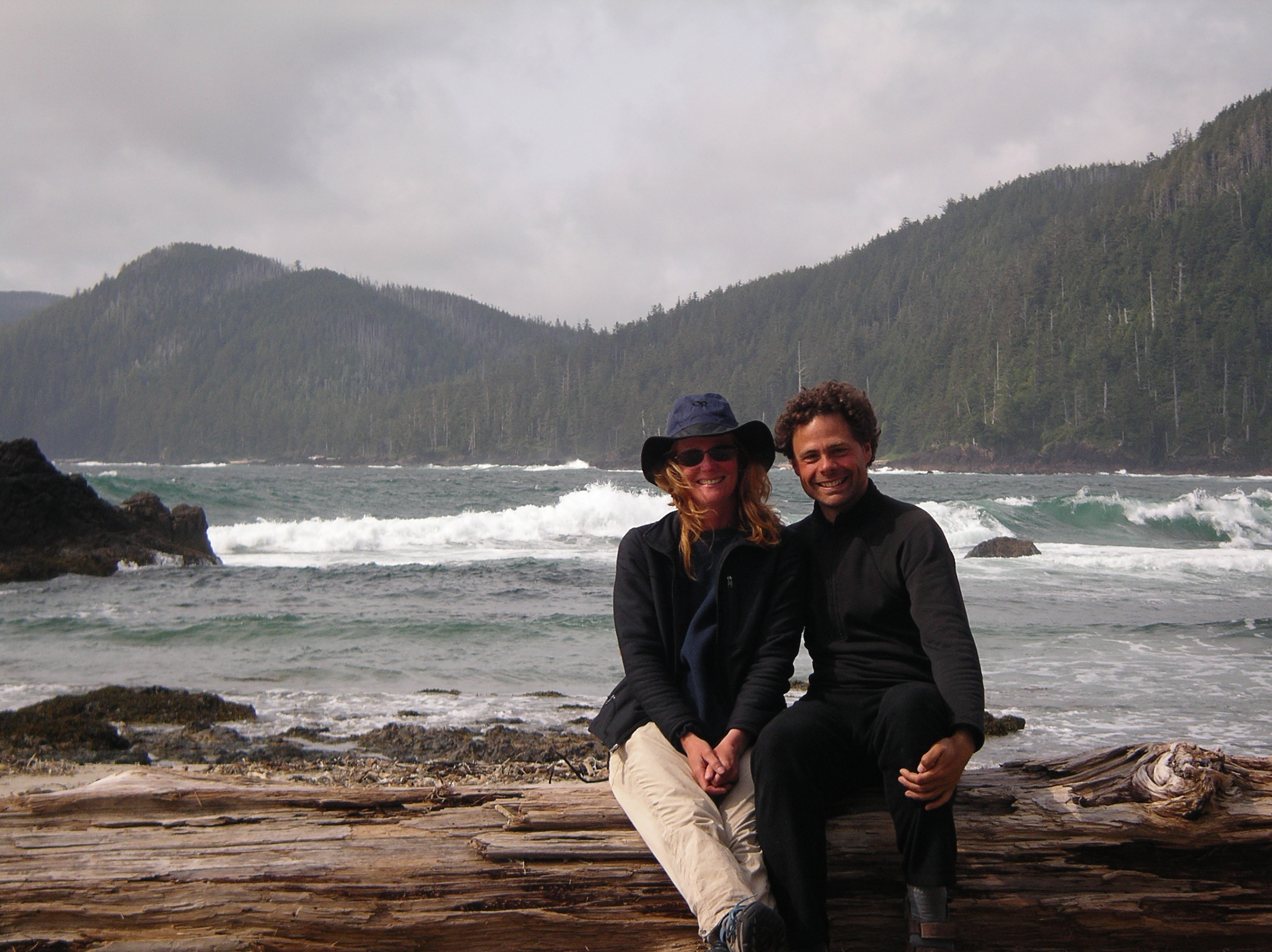
When we first met six years ago, a discussion ensued looking out over the waters of Trincomali Channel off of Wise island where Ann lived.

View from Wise Island - beach where Ann and Gord were married
Ann asked Gord if he figured people would change with the information coming out on peak oil, climate change, over population… (fill in the list). Ann’s very “rational science” perspective was that it was obvious that when presented with the facts people would change. Gord responded very “social psychology” like, that people don’t change unless they are forced to or it benefits their immediate desires (how Machiavellian). Whether it is the study of happiness, the review of history, or observing popular culture within a scientifically valid and observable threat… most people seemed to be wired to ignore knowledge and facts if the threat is not immediate: thus the opportunities to move towards wisdom are lost.
We are a funny species, (but not in the comedic sense) wherein we can actually strengthen our position against a position (or strengthen denial), when faced with facts that clearly state otherwise. This is in part due to our schema, which is the ways we have wired our individual brains to interpret the world and all the information. Think of your schema as a tree, with your core beliefs at the trunk, and all your branches and leaves are your values and thoughts about the world. We all hate change… change is hard because it means we have to re-evaluate the way we see or interact with the world. When change hits deeper down on your schema tree, you have two choices… accept the new information, and reconfigure all the branches and leaves, or ignore it.
As a rule the less experience we have with taking in and absorbing change when we are younger, the harder it is to deal with new info when we are older. The more entrenched we become and the more denial plays a role.
The other aspect that plays a significant role to change, or not changing, is conformity. If we do accept new info, and are willing to change and reconfigure our beliefs and actions, we run headlong into the issue of conformity, wherein the social stress of being different will more often than not, stop outward change.
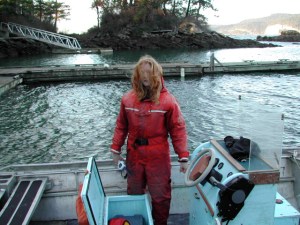
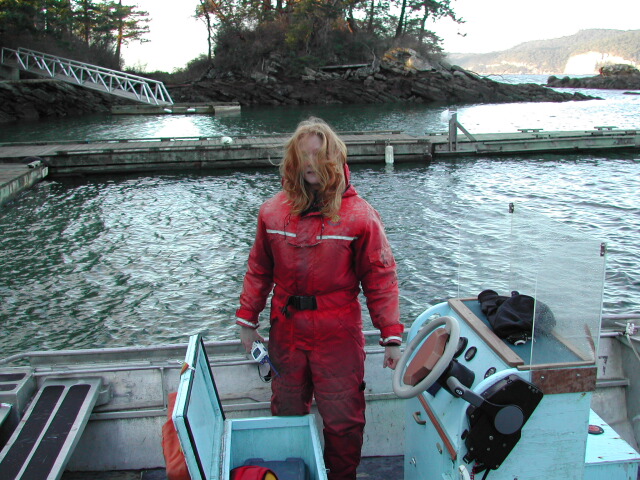
Being a bit different never stopped Ann...and Gord loved that Ann's footware of choice were rubber boots
Here’s where wisdom, spirituality and ritual collide.
And then there was “c”hristmas.
A ritual! A marketer’s dream tool for controlling the masses! Rituals are actions performed for symbolic value, derived from spiritual or community traditions, and their essence is to connect and create a social connection. Rituals can vary based on the spiritual underpinnings, (minor to extreme) and the amount of conformity that underpins community traditions. Already you can begin to see that this will be a doozy… a ritual full of opportunity for aberrations, denial, conformity… yes we are talking about christmas.
So…from our observations of christmas… here are our experiences this year.
Christmas peaks our morbid fascination of the human species from trampling stampedes of shoppers to the extremes of personal development. Oddly, we find comfort in seeing posts on Facebook clearly showing some of our friends torn position between cultural obligation and personal belief. Our comfort does not lie in the fact that our friends are experiencing a cognitive dissonance, it comes from knowing they are on a journey, away from conformity, one in which we both have already made; these journeys bring a contentment in freeing oneself of the obligations, materialism, the garbage generated from Christmas, the greed, and the want.
It has taken six years for Ann and I to be at peace with the season. Ann is at peace with separating from the “expectation” though is saddened by the cultural obsessions that lay such a heavy burden on the earth. Gord is much more shallow, his peace comes from his pleasure in the perversive pastime of pointing out every instance where the holiday demonstrates insanity, (nicely ranted on by Bill Maher in his comedic christmas message.)
Parker and Emily were fascinated with the learning of the origins of christmas, the corresponding symbolism, and the fact that in 351 AD Pope Pius 1 moved the celebration of the birth of Christ to December 25th. They learned of the varied rituals in pagan traditions that celebrated solstice, the rebirth of the sun, the giving of gifts, the burning of yule logs, and the incorporation of a tree; all demonstrate to the kids the concept of how humans have the ability to create symbolic structures that add value to their experience. After learning how christmas has evolved over the ages they get a sense of the ritual, and get to compare the past to the present. What has been added to the present day ritual to make the season so special and full of symbolism and celebrate our cultural spirituality… which now includes a consumer culture? Videos of people being trampled during Black Friday and Boxing Day sales, and the sheer stupidity of the media reporting on the 6 o’clock news about the “deals to be had”. Yes goodwill to mankind is evident! Thank goodness that evolving spirituality allows rituals to also evolve.
Evolution of a ritual can (and needs to) happen on an individual and community basis, and only by taking on your own journey, setting aside conformity, to choose if a ritual/experience adds value to your life, will it ever truly sink in. It took 6 years for Gord to move away from obligation of gift giving, not being able to compete with giving the kids the same or better experience they would have in their other home, sadness to not allow the kids to have the “magic” of the season. The magic? Of what? The magic of learning debt? The magic of their dad working more to pay for the debt? The magic of measuring love based on the amount of presents? The magic of indoctrination through a coming of age ceremony into the clan of the consumer? Maybe when they are adults they could experience the excitement, anticipation , exhilaration… the “magic” of being trampled at the front of the lineup fighting to get into Hellmart (as this ritual seems to now become part of the seasonal tradition).
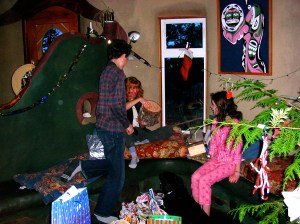
A Mud house christmas
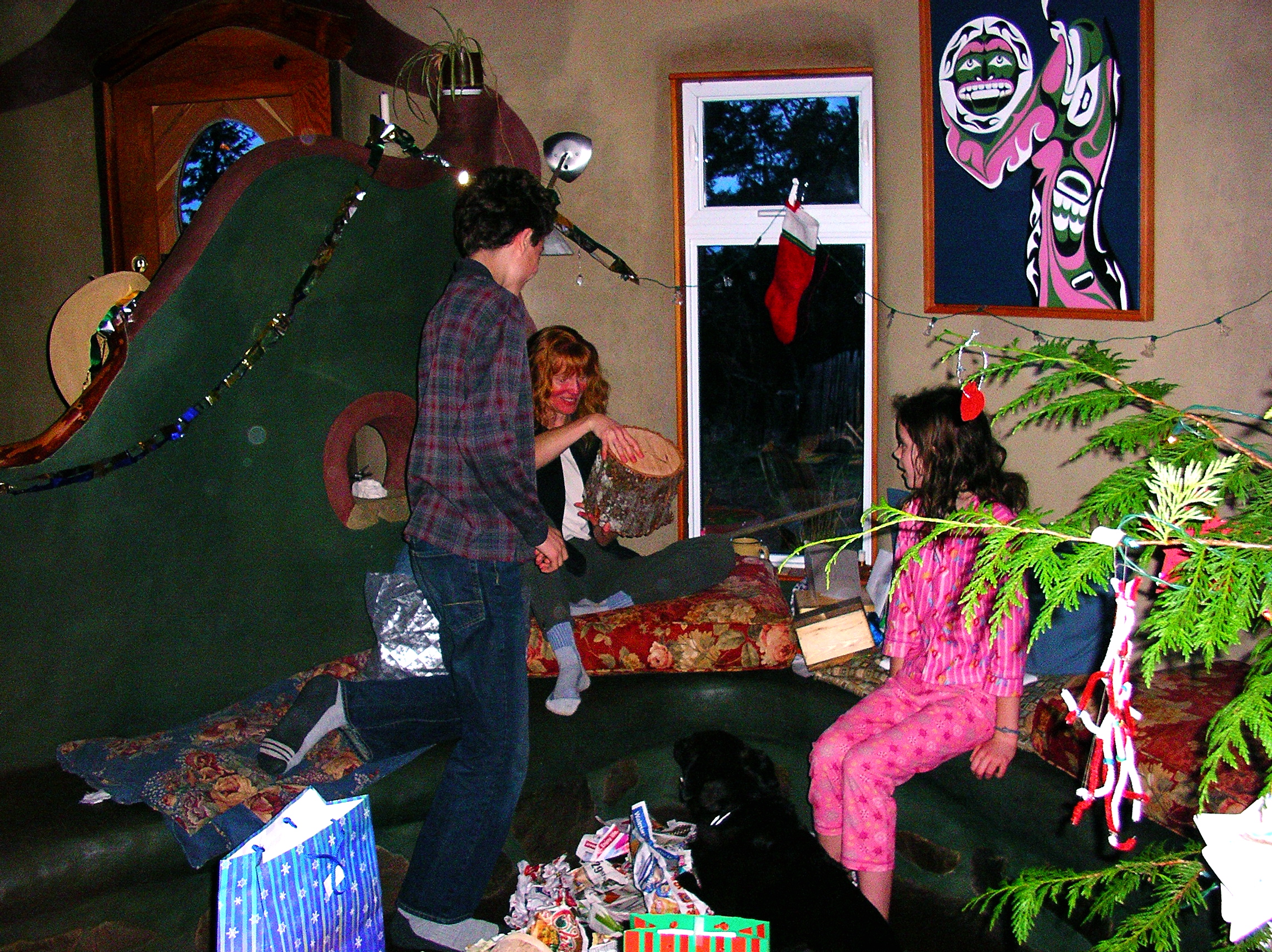
We had a wonderful family Christmas with our family ritual of sushi for Christmas Eve, a beautiful little cedar tree (5 ft), decorated by the kids with mostly homemade ornaments each having a special memory, fresh from the oven cinnamon buns Christmas morning. Our simple gift giving started with stockings filled with organic fair trade chocolate, home made bird houses to mount on our home (kids made), a few re-gifted items, home made beautiful wooden toilet paper dispenser, and the kids each got a photo album from Ann with over 100 photos of our life together since Ann met them 6 years ago. All our gifts were wrapped in either reused gift bags (paper and cotton) or newspaper. Our entire Christmas produced only 3 tiny pieces of garbage. We had a very merry Christmas.
Oddly, veering away through choice still sets you up for judgement as Gord experienced this year; he was accused that by not participating in christmas like a good north american, that Gord had become a humbug… defined in the very fact that he used a homemade term like Solstmas (actually created by the kids last year). Needless to say the theory on humbugs needs more work, as Ann and I had the best day yet… call it what you like. Many religions have various different names for their rituals celebrating various days/seasons of significance… how unchristian and humbug they must be. Boxing day, another ritual, for us was filled with pruning grapes, moving plum trees, planting a fig tree, reading, talking and having a rum…and yes rum is imported with embodied energy and water footprints. Hell…we are just not perfect…nor are we even attempting perfection.
We are a weird species, ignoring information, deluding ourselves as to where we receive our enjoyment and happiness, and socially manipulated through rituals greatly perverted from their origins. We are a creature that follow in the footsteps of all the earlier evolved species where we share if all is balanced, but we destroy one another if we have too much. And here we sit at the greatest point in our existence, as we tread on the territory of theologians, (we are sure to raise the dander of those better versed on the topic). At this point it sure seems the conquest, war, famine and death are all clad to a horse, a horse that symbolizes resources, and whether it be conquest over oil in the face of evil or good, wars over water or diamonds, civil unrest over financial fuck-ups, growing extreme poverty, inequality between classes, famine from climate change, or death from all the above and the diseases that follow… it really is a wonderful time to be alive. Just as we are sure that many thought similarly so in the earlier civilizations before us.
So in conclusion, we hope the new year leads you on a journey of discovery to actively shape the reality you crave. Question everything about our culture, absorb into your being what you may not wish to hear, and rattle your psychological tree dropping a few leaves and growing some new ones… take a step to the side of the thoroughfare, lighten your footprint, and expand your wisdom.
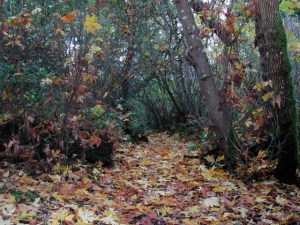
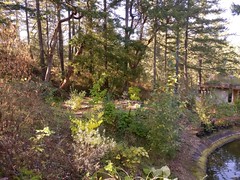
Fall on Wise Island
Dropping leaves and growing new ones on a daily basis,
Ann and Gord











 Eco-Sense