Category Archives: Uncategorized

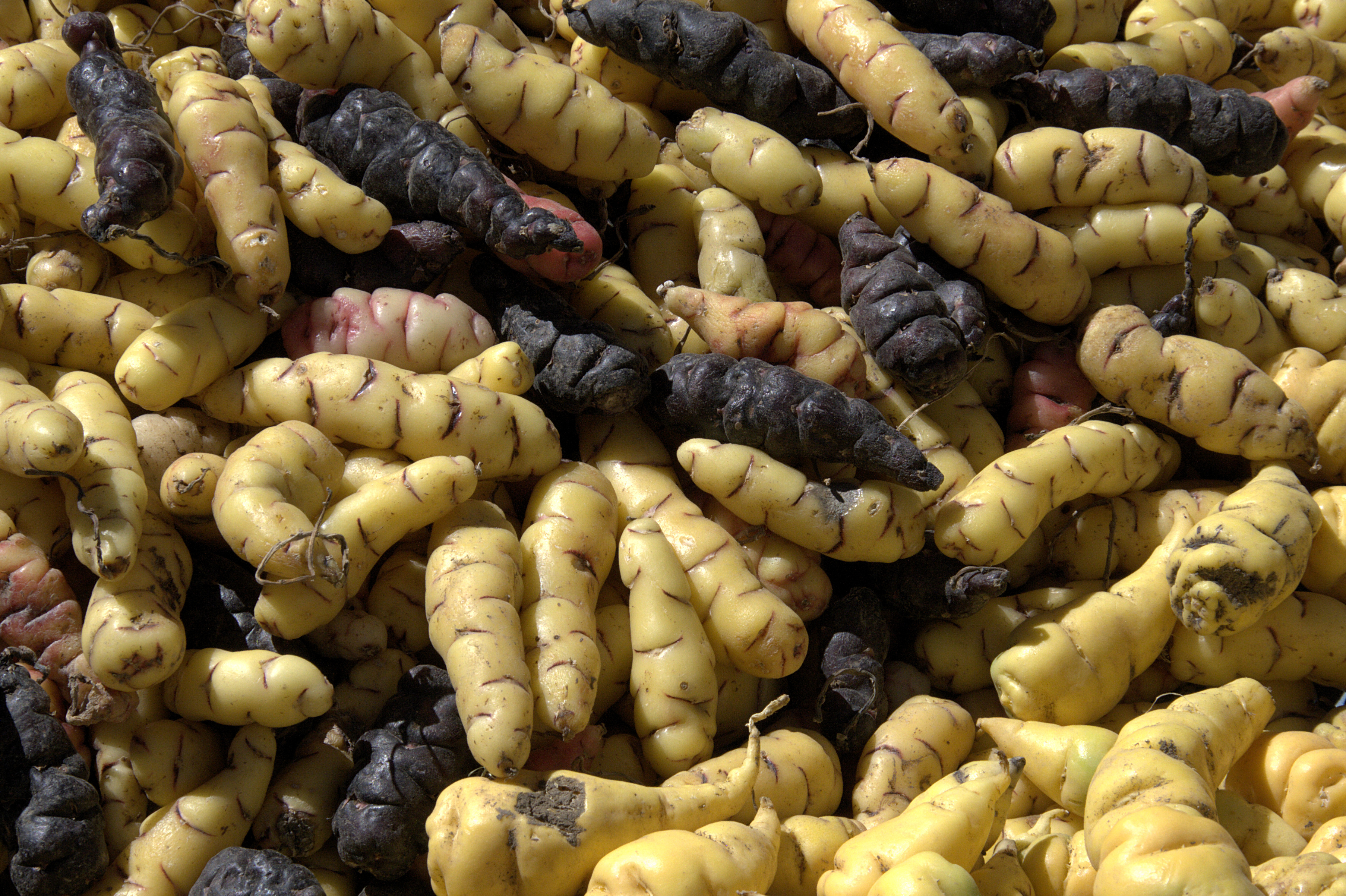
OCA – a very special Andean Potato


Feature Plant:  Oxalis tuberosa (OCA)

Oca is a small tuber that is a staple crop of the Inca.  They have literally thousands of types of these small potatoes…one for every micro climate in the Andean mountains.  Preserving genetic and biological diversity is essential for a changing climate.  Here is a BBC documentary on OCA  and 3000 other nutritious tubers grown in the Andes for a more resilient and nutritious food source.  https://www.youtube.com/watch?v=vSHrNwQle1E

Oca.  Lemony mini potatoes

Oca. Lemony mini potatoes

We think that every garden should grow a patch of OCA, our favourite spud.  We have OCA available for $12 a pot.  Not too late to get into the ground for a fall crop to eat.  One plant should produce enough for one meal or leave them in the ground to expand your tuber plot for many future meals.   Makes excellent ground cover.
OPEN House for perennial plants sales
Saturday June 14 from 10am – 2pm.  

3295 Compton road, East Highlands (near Victoria, BC).  We have OCA and LOTS more.  Here is our plant list.  Prices include GST.  We accept cash or cheque.  We also have two Good King Henry available (not on our list)…productive perennial spinach.

Oca is a PERENNIAL growing to 0.5 m (1ft 8in) by 0.3 m (1ft).

It is hardy to zone 7 and is not frost tender. It is in flower from Jul to August. The flowers are hermaphrodite (have both male and female organs) and are pollinated by insects.

Beautiful ground cover looks clover like

Beautiful ground cover looks clover like


Suitable for: light (sandy) and medium (loamy) soils and prefers well-drained soil. Suitable pH: acid, neutral and basic (alkaline) soils. It cannot grow in the full shade. It prefers moist soil.

Tubers – raw or cooked. An acid lemon flavour when first harvested, if left out in the sun the tubers turn sweet, so sweet in some varieties that they are said to resemble dried figs and are sold as fruits in local markets in S. America. The cooked root is delicious whether in its sweet or acid state, it can be boiled, baked etc in similar ways to potatoes. The tubers tend to be rather smaller than potatoes, with good sized specimens reaching 8cm or more in length. The slightly waxy skin makes cleaning them very easy. They contain about 70 – 80% moisture, 11 – 22% carbohydrate, 1% fat, 1% fibre and 1% ash. The carbohydrate is rich in sugar and easy to digest.

peruvian Oca (Oxalis tuberosa)


Current ebb and flow of Currants, Currently


Our current affection  (remember we’re married) is for our currants  but is really not all that current, as over the past five years we have come to love and covet them.  Our current currant trends, have spawned us to expanded our currant selection, which just happens to currently be Red, Black, Pink, White and why not add Josta  to the list as well.    Too much?

Why should you like currants too?  Well… besides providing a reason for you to come visit us, the small shrub plants are notoriously adaptable to a host of situations, from part shade to full sun, making them ideal to use for hedging, wind breaks, pathway edging, and in particular for us to help stabilize edges on paths cut into steep slopes.  Oh and there are the edible aspects and their medicinal qualities (like the black currants).   They are easy to propagate, thus once you have a couple, you can expand your  stock easily –   and you are on your way to self sufficiency, (almost).

This saturday (May 31) we are open from 10 am – 2pm to chat about all things leafy and edible, along with anything else… and currants fall under both those categories.

We grow a whole host of plants in this family, the Ribes family, including the currants (red, black, white and pink currant), gooseberries (yellow and red), josta berry, thimble berry and salmon berry.   We also grow lots of flowering red currant for the beauty and the bees.

Location: Currants like morning sun, afternoon part-shade and buoyant air circulation. They can be grown in the high shade of fruit trees such as persimmon, as well as on the north side of buildings. The leaves sunburn readily and the plants collapse quickly when the soil or air temperature exceeds 85° F. Currants can withstand ocean winds but the salt air will burn the leaves and turn them ragged.
Soil:  Currants are not finicky about soil but, in keeping with their proclivity for cold, prefer heavier soils richer in clay. A thick mulch of some organic material also keeps the soil cool in summer while adding humus to the soil. Sandy soils are less suitable for currants because they dry out too fast. The plants will not tolerate alkaline or salty soil.
Irrigation: With their fibrous, shallow roots, currants are are ideal for drip irrigation. Keep the plants watered until the fruit is harvested. At this point they stop active growth and the watering frequency can be reduced. Plants stressed for water are susceptible to mildew.

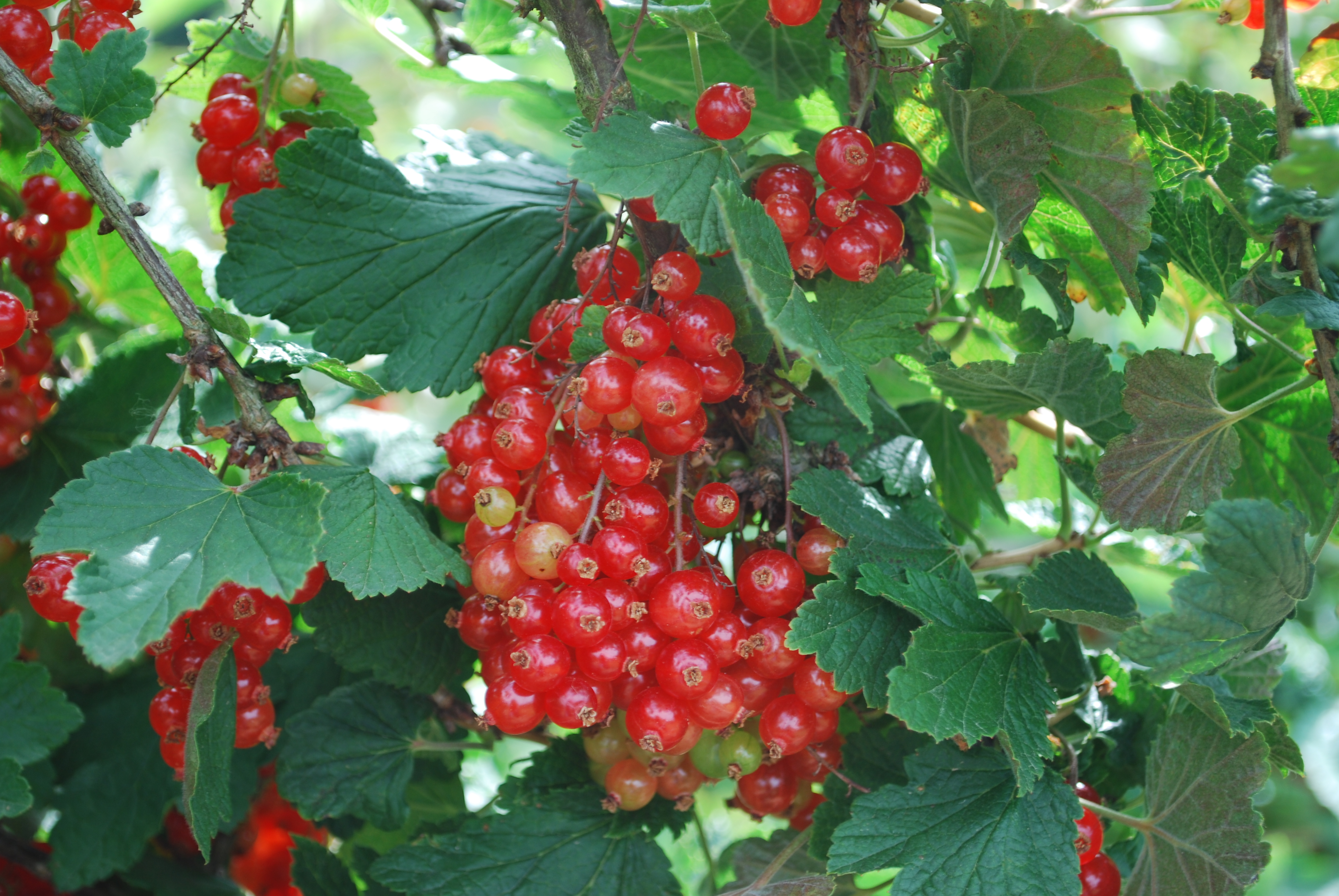
Red Currants
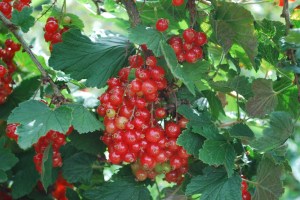
Red Currant

Red Currant

Sweet and Tart at the same time, we eat them by handfuls straight off the bush.   Noted for their iron and vitamin C content, 100 grams provides 68% of your daily C intake.   A mature bush  (4 years) can provide up to 4 kg of berries.


White Currants
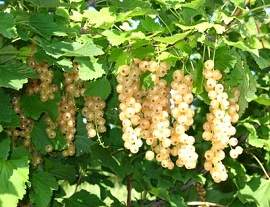
White Currant

White Currant

We have two varieties (White Pearl and Swedish).   They are virtually albino versions of the red currant.   Other than the difference in colour the reason we are growing these is that the birds seem more attracted by the red, than the non-red, hence we need to do less protection to save them for ourselves.  Slightly sweeter than the red currant.

Pink Currant

The cultivar we have is Gloire de Sablons the most common planted cultivar.  Bush is upright, not branching, very productive, and the berries quite are large but few on strig.

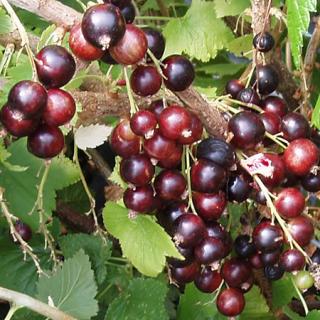
Black Currants

Ben - Black Currants

Ben – Black Currants

Black currants, especially the canadian cultivars are highly astringent thus fresh eating is limited, which is why we have chosen  the variety from the Scotlan Research Institute, Ben Hope, Ben Connan and Ben Tirran.   These are higher in sugar, and suited well for fresh eating, strong resilient and self fertile cultivars.  That said, all plants do better with a buddy.  One cup of black currants provides 338% of your daily requirement needs of Vitamin C, and then there is the high iron, potassium, phosphorous and maganese, which outdoes all the other currants.
Ben Connan  an early variety outyeilds all other varieties on a compact small bush, with very large berries.   It has large, deep black berries with a pleasant acid/sweet flavour, compact growth habit makes it suitable for u-pick farms and the home garden market. Great for fresh eating, jams, preserves, canning but needs to be harvested good and ripe for best sweetness.
Ben Hope, a tall upright bush, has good yields of sweet medium sized berries.   Is thought to be an ideal specimen for low input growing systems… anything we grow has to be neglected to survive.
Ben Tirran is a  late cultivarwith a growth habit upright and vigorous (not a tall as Ben Hope) with pleasant tasting medium sized berries. It flowers a little later than other Ben series black currants so it has reasonable tolerance to spring frosts. Fruit is suitable for both juice and jams.

Josta Berry

Jostaberry

Jostaberry

Josta berries are hybrids of black currant and the American gooseberry, the bush is tall, thornless, tends not to branch and requires the space of 2 currant bushes. The foliage is glossy, larger than gooseberry, lobed, scentless and resists mildew. It survives full sunlight but requires much winter chilling. and as for edible they have the black currant flavour with the gooseberry sweetness.   There are some thoughts of back pollinating these with the Ben series to increase the berry production up a notch while maintaining the sweetness.

Gooseberries

Gooseberry

Gooseberry

Hinnomaki cultivars from Finland are sweet and flavourful.  Growing 2 metres in height, they are prickly stemmed.
Hinomaki Red Gooseberry has heavy crops of red medium sized fruit borne on upright plants that have good mildew resistance.


Hinomaki Yellow Gooseberry

Heavy crops of yellow-green medium sized fruit are borne on upright plants that have good mildew resistance.

Flowering Red Current and Thimble Berry are not potted though if interest is expressed, we can harvest  from our transplanted stock given prior notice.

So as you can see we are big fans of these little but copious fruits.  We thank our neighbour Ingo for introducing us to them in ALL THEIR FLAVOURS AND COLOURS.    Hopefully you too might follow the current, so you too can exclaim you’re a current fan of currants.

Haskaps and Honeyberries WTF is the difference?


Wow, it is Friday already and we have not yet posted our plant profile for this week.   And when tomorrow’s open house comes (Saturday from 10am-2pm), whatever will we have to talk about if we don’t post something?    (Ann:  Lots Gord…we talk about other things too you know…not just plants.  We talk about chickens, ducks, and cheese too…maybe even kefir and sauerkraut).  This week’s plant profile is a toss up between our three year old Arbequina olives (Olea europa), the replenishing of our tea stock (Camelia sinensis), new oca, the dwindling supply of Sichuan pepper trees (only 3 left)… or our late bearing Japanese Lonicera caerulea varieties emphallocalyx and  kamtschatica or HASKAPs for short.   (Ann:  eyes rolling as Gord spews out his newly learned latin).  (Gord: Ann loves when I speak in different languages).

But before we tell you about the plant of the week, we just have to say… What a week!  Composting bathrooms being built at a local park/public orchard (Welland Park), more cheese, more plants, (Ann:  More cheese), the Ladysmith Garden Club tour (Ann:  A very nice tour crashing couple arrived that the Ladysmith group invited to join their tour), plants arriving (Ann: and then Gord leaving me to move all 250 of them out of the sun), and Our Eco-village mega-tour with great people leaving with hugs as they headed on to another amazing place full of stories, Madrona Farm.   (Ann:  Yeah, then I headed out to my neighbours to milk her goat, swap stories, and return home with more milk…to make more cheese).  Did we mention our last shipment of plants… yup, we had under estimated the interest in the edible perennial food systems, and would never have had the stock  to make it to June… and left us without our propagating stock… even digging out our extra male fuzzy kiwi out of our garden. (Ann:  Males can be so redundant eh?)  We have had emails  with pictures and questions to identify plants, and recommend options.   We love the amount of interest in all the cool things from plants to… did Ann say cheese?.

Oh and not to mention, we observed the success of last year’s roof top squash bed on our steel container, where 150 squash hung off the sides (Ann:  Gord always exaggerates…it was 120)… so this year we have planted the house roof with butternuts and watermelon (Ann: note…Ann planted them…ok Gord carries up the bales and most of the buckets).   Are we crazy?  Only Ann!   (Ann:  Only Gord)(Guess who’s writing this update?).  (Ann:  Ann’s editing).

We have decided on profiling the plant which seems to have a lot of partial information on it … so here it is…wtf?  (Ann: Want The Facts?)

And one last piece of info… here is the up to date online list of plant availability and pricing .

Honey Berry – Haskap – (Lonicera caerulea spp.)

o   Lonicera caerulea var. edulis – Russian (Early)

o   Lonicera caerulea var. emphyllocalyx – Japan (Late)

o   Lonicera caerulea var. kamtschatica – Japan (Late)

Why Honey Berry or Haskap?

First off why the different names? The Russian varieties, have been referred to as honey berry, and the Japanese have been called haskap. The two varieties have different characteristics, but what both do have in common is that they are an early edible blue coloured berry that comes from a beautiful understory bush, that can be grown in our climate. It is hard not to turn away from early berries.

L. cerulean var. edulis – Russian/Canadian Cultivars EARLY SEASON

These are notably the hardier cultivars that can handle the extreme cold in Canada and Russia, and thus they have been a berry that has been bred to live through a Saskatchewan winter. These varieties ripen early. Our recommendation for the early varieties is to plant in areas where they get early morning sun, avoid the frost pockets.

  • Tundra – grows 5-6 ft tall, berries are firm and thus makes them ideal for machine harvesting, but great for the home garden, and has a sweet-tangy flavour. Borealis and Tundra do not pollinate each other well – Pollinated by Honeybee or Berry Blue. More Info
  • Borealis – grows 5-6 ft tall. The SWEETEST honeyberry, high yield large fruit. The berries are soft, plump, boxy and largest. It has large fruit and is the sweetest cultivar though it does tend to bleed.  Excellent fresh eating. Tundra is a poor pollinator for Borealis, Honey bee and Berry Blue are the pollinators. More Info
  • Honeybee – a tall pollinator plant suited for Tundra and Borealis. Berries are tart and used in jams and juices… they are the least tart of the Russian pollinators.   More Info

L. caerulea var. emphyllocalyx and kamtschatica – Japan Cultivars LATE SEASON

These come from Northern Japan, are 3 -4 weeks later than the Russian/Canadian cultivars, and are well suited for the coastal climate of the west coast from Oregon on north.

  • Blue Hokkaido – upright 4-5 ft. tall growth habit and very large, sweet-tart, crisp and flavorful, dark blue berries.   Bloom in March, ripen in June.
  • Blue Moon – 2-3 ft tall and wide. Very cold-tolerant — withstands temperatures as low as -40°F. This hardy variety features lovely dark green foliage. Good for fresh eating or making preserves. Full sun or partial shade. Best pollinator: Blue Velvet. Blooms March, ripens May-June.
  • Blue Pagoda – Sweet berries. Best pollination with Blue Velvet. Blooms March, ripens May-June
  • Blue Velvet – 4 ft tall by 5 ft wide compact spreading   A unique variety, distinguished by its attractive, grayish-green, velvety foliage and its very large, sweet-tart and flavorful, medium-blue berries. Grows well in cold regions, it is also a particularly good choice for Maritime Northwest gardeners.Large crops of very large tasty berries. Cold-tolerant. Good for fresh eating or making preserves. Best pollinator: Blue Moon. Blooms March, ripens May-June.
  • Blue Pacific – 2-3 feet tall and wide. Actually an L. caerulea edulis. A reliable producer west of the Cascades and in other regions of North America. Bloom March, ripens May-June
  • Blue Mist – 2-3 feet tall 3-4 ft wide. Heavy producer of large sweet tart berries. Blooms March, ripens May-June.

Growth

Generally they all will grow in part shade to full sun, though we recommend that if you live in an area with hot summers, as we do (in summer we are 5-7C hotter than Victoria), to give them protection from the heat.   Our other recommendation is to plant the early ones outside of frost pockets, where frost does not impact the bloom or the pollinators, thus where they get early sun and where the pollinators won’t get chilled.   As for the late season, plant where you wish.

Edible

The descriptions above lay out the edibility… early berries that range from sweet to tart.  Some are firmer and thus if you are so incline to use a machine to harvest… they’ll be great though I suspect all will be loving hand picked and eaten with enthusiasm.  The sweeter are great fresh off the bush, the tart ones mostly dedicated as the pollinators, are great for juice and wines or pies.


Chestnuts – feature plant for Sat May 17 open house


Our weekly farm gate open house this saturday (May 17th from 10am-2pm) features Chestnuts.  (open house details)  We believe that chestnuts will be an essential perennial food plant in the decades to come.

cropped-dsc00433.jpg

With climate change causing global disruption to food production, perennial foods just make sense.  Perennial plants like chestnuts, hold the soil together year round, and are more drought and heat tolerant.  PLUS, chestnuts can be ground into flours to make all kinds of nutritious foods without gluten and they even feed livestock.  Large food producing trees also sequester large amounts of carbon in the tree and the soil.  So whether you are concerned about local food, a healthier diet with less grains, mitigation of climate change, or adaptation to a changing climate, perennial plants are for you.

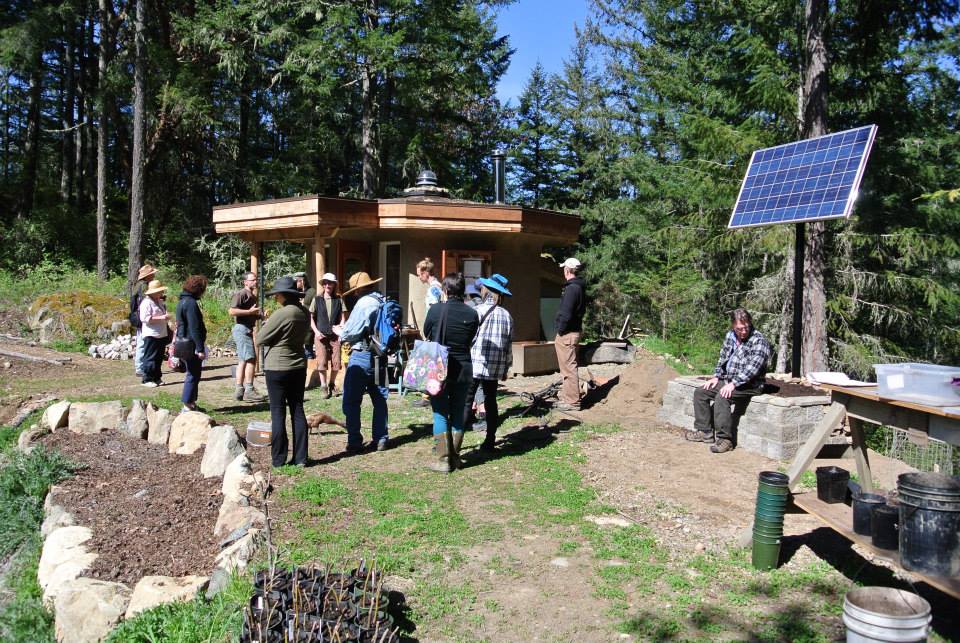
Tour group in front of Eco-Hut (office for farm business)

Tour group in front of Eco-Hut (office for farm business)

Come on out to Eco-Sense this saturday and have a visit, talk, walk, learn and even share your favourite rants.
We have chickens and ducks so please leave your pets at home.

Ann and Gord


Chestnuts – Castanea spp
– Chinese Chestnut – Castanea mollissima
– Japanese Chestnut – Castanea crenata
– American Chestnut X – Castanea dentata
– European Chestnut X – Castanea sativa

Why Chestnuts?

Chestnuts are the replacement for grain crops, are perennial, heavy producers of nutrient dense food for humans, wildlife, and farm animals alike.  Considered the most important tree in temperate climates, and the topic of many books including Tree Crops: A Permanent Agriculture by J.R. Smith which was one of the pivotal  books that spawned Bill Mollison’s permaculture revolution.

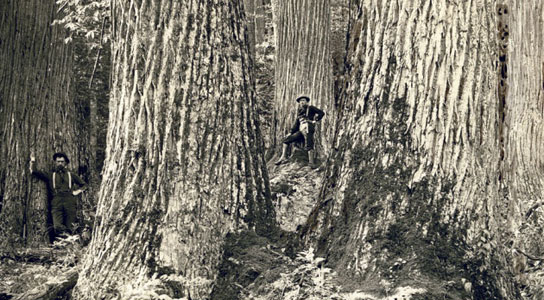
American Chestnut - WOW!

American Chestnut – WOW!

In North America the giant American Chestnut (Castanea dentata), (100 ft tall, 10 ft diameter trunks), was the most valuable crop due to the shear quantities of reliable food it produced, and the exceptionally rot resistant wood it produced. In the early 1900s chestnut blight was introduced and heavily impacted the orchards – the die off was massive. In true human fashion, rather than protect the surviving chestnuts which may have been the genetically resistant version of the American chestnut trees, there was a huge push to chop them all down and harvest the wood before they went extinct, as is done in good human fashion.   This virtually eliminated any chance of bringing the American Chestnut back.

Chinese Chestnut 40 feet


Japanese Chestnut – 20 feet tall

The Chinese Chestnut (Castanea mollissima) had evolved with the blight and had natural tolerances, and has since become the most widely planted chestnut in North America. The Chinese Chestnut has been used to cross with C. dentata to breed a cross that is blight resistant.   The Chinese chestnut is about half the size of the American chestnut growing to 40 ft tall, multi stemmed, has larger nuts, is suited for drier rockier soils than the Japanese chestnut.

The Japanese Chestnut (Castanea crenata), also with resistance to blight is being is also being used as a breeding stock to build immune resistance into the American chestnut. The Japanese chestnut is the smallest, reaching heights of 30 feet, with a multi stemmed growth habit, and has been known to have the largest of the nuts (up to 40 g).

European chestnut - 60 ft

European chestnut – 60 ft

The European Chestnut (Castanea sativa) is large like the American chestnut, and highly edible. It shares all the similar benefits as the others. We believe our crosses from Gabriola Island and Fernwood are C. sativa crossed with Chinese… but we will observe growth habits and leaves.

Growth

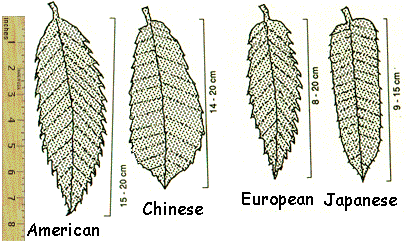
Hardy from zones 5-8, all will need a start in moist well drained loamy soils, though once established the Japanese and Chinese will handle dry conditions well, and the Chinese can handle rockier soils. Nut production should begin in 5-7 years, with heavy crops in 10-12 years.  LeafComparisons If planted in the sun, the tree will form more nuts, but if partially shaded, there will still be nuts, so we just planted more trees.   We are transforming areas over the next 10 years where as the chestnuts grow taller, we’ll harvest some of the surrounding taller trees to allow for the chestnut to become the dominant center piece.

Edible

Yes!   Nuts are a major food source for animals (including us silly humans). In comparison to other nuts they are low in calories, due to less fat, high in carbohydrates making them a good substuitute for grains for breads. They are high in folates (folic acid), 100 g has 72% of DRI of vitamin C, rich sources of oleic and palmitoleic acids (mono-unsaturated fatty acids). Further, they are also rich in many important B-complex groups of vitamins. 100 g of nuts provide 11% of niacin, 29% of pyridoxine (vitamin B-6), 100% of thiamin, and 12% of riboflavin.
Boiled, roasted, raw, as a flour, these are versatile.

Other uses

Wood of all cultivars is strong and long lasting. The leaves , bark and seed husks are high in tannin and can be used in tanning hides.


Saturday May 10th: Edible Perennial Plants at Eco-Sense featuring The Autumn Olive


Our 3rd open house of the season on Saturday from 10am-2pm:
Map
Eco-Sense
3295 Compton Road, Highlands, BC

Last Saturday we had another successful farm gate open house at Eco-Sense. Enthusiasm for perennial plants and local living is growing…almost faster than our food forest. People come to Eco-Sense to buy perennial food plants, eggs and seeds but ALSO to talk, walk, and learn.

We love that we are not just a nursery. We are a place to share stories, learn, connect, and feel inspired to put some permanent roots in the soil.

Also on Saturday is this very special workshop hosted by our good friends at Hatchet & Seed:  An awesome opportunity to learn about specific perennial plants.

Also on Saturday is this very special workshop hosted by our good friends at Hatchet & Seed: An awesome opportunity to learn about specific perennial plants.

People are coming and bringing their friends and family to stroll through our various gardens, peek at the cob house, the Eco-Hut, chicken coops, root cellar, and to socialize, hang out with chickens and ducklings, and to get ideas and share ideas.

For further details click here:  OPEN FARM DETAILS:

What fun! Thanks everyone!

Autumn Olive – Elaeagnus umbellata

Why Autumn Olive?

If you have never read about permaculture then you would never know why we consider this to be one of, if not the most, important plant we grow. This plant has many uses as a food source as well as a support plant for the fruit and nut trees and ground covers which means that we include many of these small trees.1326053669-eleagnus1_web

First off, lets just say the autumn olive is not a olive at all, but a fruit that looks like an olive, except yellow, orange and red. The fruits are delicious!   But not getting all anthropogenic and thinking about our taste buds (and health) this shrub is a nitrogen fixer for the soil.   Classified as a pioneering species, its role is to collect nitrogen from the air, suck it down to the roots where mycorhizzae (fungi) develop a transport system that takes that nitrogen and then feeds it to surrounding plants.   This means we do not need to bring in fertilizers to feed the other plants! We ultimately wish to have one plant for each of our various fruit and nut trees (this means upwards of 50).

Elaeagnus_umbellata_AutumnOlive_fruitsGrowth

This deciduous shrub grows 12 ft tall, hardy to -30C, and handles dappled shade to full sun.   We grow ours in the understory of our arbutus grove and in two areas that get full sun. We have found those in the dappled shade have grown quicker.

Edible

The berries!   Delicious and high in lycopenes, an intermediary in the creation of carotenoids, which integrate into the lymphatic system and both aid in reduced cancer (especially prostate) as well as increasing the resistance to skin damage by UV radiation .autumn olive berry closeup

Other uses

Nitrogen fixation for use by the other plants surrounding the autumn olive is one of the most important for us.   The flowers are a key insectiary attractant.  It was introduced to North America 100 years ago as a soil stabilizer for heavily impacted and damaged landscapes, and as it is a pioneering plant, it performed this job very well… some may say too well, but we can’t blame a plant for our own human invasiveness and land impacts – here we keep it in check by eating it… and the deer do too, (too bad scotch broom is not edible). It is also a key source for mulch during the growing season as its prunings are chopped and dropped and become mulch, as with the leaf drop in fall.

We have Garnet and Ruby cultivars, and by the end of next week will have Amber too!