Category Archives: Technical data

Interview questions from Custom Home Builder Magazine about the “Living Building Challenge”


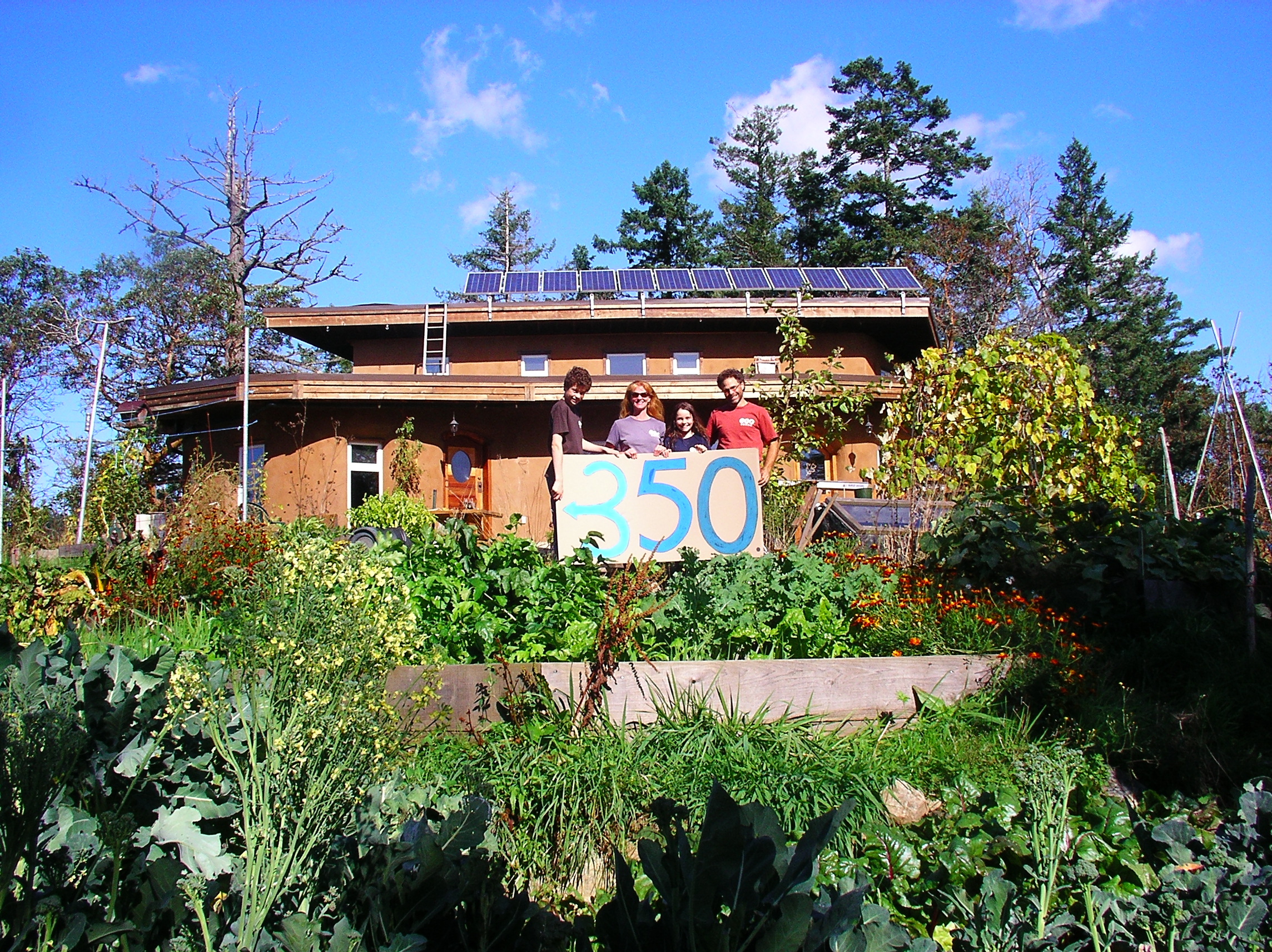
Home is constructed out of very similar materials to the food gardens.

Who designed the house’s plan and overall aesthetic? The shape of the house was determined by the site orientation, the previous damage on the land, and the existing bedrock.  A Geotechnical engineer mapped out where we could build and then we transposed this to paper.  We divided the house into two living spaces, one on the east, and one on the west.  The East side had to include a one level suite for my parents, and the west side included the living space for Gord and I and the kids with our bedrooms upstairs.  It was all very practical…Nature was the head architect, and we designed the space for Function and Beauty with the help of a friend (Cindy McCaugherty of http://www.raincoasthomes.com) who translated all our drawings into AutoCad for the Structural Engineer.   Cindy helped a great deal with many of the details…both structural and the functional layout of the rooms.  The layout of our living/dinning area was in all honesty inspired by a big slug that our daughter Emily (7 at the time) proudly showed off wrapped around her little hand in a beautiful “S” shape.  I saw this and immediately made the connection and translated this shape into our home.  I’ll never forget that moment as we had struggled for quite some time as to how to lay out the space to create the feel that we desired.  As far as the overall aesthetic goes…we didn’t plan it…it just kind of evolved.  The odd thing is that Gord and I never considered ourselves to be creative…we are actually kind of techie/ science nerds.

Why did you decide to pursue the Living Building Challenge?  We had already broken ground when the LBC was launched.  When we heard of it we realized that we already had the same vision.  Up until then we had felt kind all alone in our ideals, but then suddenly there was a name for our dream and a sense of belonging to a wider community that understood the same basic ideals.  We had looked into the LEED program but there was nothing yet in Canada for homes.  The LEED for homes pilot program was just getting going in the US and not yet in Canada.  The LEED program also seemed  too commercial and prescriptive for our approach.  The beauty of the LBC is that it is not prescriptive in the petals or prerequisites.  The visionary LBC program itself was actually more like an ecosystem, which from a systems perspective IS the only type of proven long term sustainable system.  The Eco-Sense home and all of the systems were not fully designed before we started building…they evolved.  System integration has become our specialty as we design with a whole systems approach which is very much in line with the LBC.  Because we were mostly just the two of us and we had limited prior knowledge of how things were SUPPOSED to be done it enabled a creatively and systems thinking approach that was very original.  Like I said earlier, nature was the architect, and we designed following this lead with a whole systems ecological approach without any preconceived ideas of how things were supposed to be done.

Was it difficult to incorporate the challenge’s requirements into Eco-Sense’s design/building plan? Nope, it all made sense.  We didn’t change very much.

Your house achieved 4 of the 6 “petals” in the challenge–What could you have done differently to achieve the remaining two petals: energy and materials? Would you have done this if you’d been able to? We met the requirement for 12 of the 16 prerequisites.  The energy petal was not possible for us at the time.  Our family is net zero electricity selling excess to BC Hydro and we have 60 solar thermal hot water tubes for domestic hot water and in floor hydronic heating, but we still use propane for cooking and wood gassification for extra winter heating.  To meet the challenge, combustion or fossil fuels are simply not permitted.  We could have tripled our 2 kW solar PV array, and put in two electric cooking ranges.  This also would have enabled the use of a heat pump powered by solar PV.  For us at the time using a wood gassifier (smokeless, and 85% efficient) was a good local choice as we live on 8 acres surrounded by trees.  However saying this we do agree with the requirements of the LBC for NO COMBUSTION.   If we were to do it again, we now have the knowledge/ability to design from the ground up a much more efficient envelope with expanded solar thermal heating and possibly, very small heat pump back up.

The MATERIALS petal also proved to be problematic…see details of the 5 prerequisites in this petal:

  • PR05 Materials RED List:  YES!  We successfully avoided the toxic materials red list (the toughest of all prerequisites).
  • PR06 Construction Carbon Footprint: YES!  Eco-Sense home has a ZERO carbon footprint…no carbon offset payment required.
  • PR07 Responsible Industry:  NO! 100% of wood must be FSC, recycled, or milled on site.  But alas, we only achieved 90%.  (We tried but couldn’t at the time source FSC certified local plywood.)
  • PR08 Materials service radius:  NO!  Scored perfect…except for the imported Bamboo.  (better planning on our part…our focus at this time was to get our family into the house and not spend another winter in the trailer).
  • PR09 Leadership in Construction Waste:  NO!  The three generation family of six produced one can of garbage every two weeks during the build (includes domestic garbage and construction waste)…but alas, we did not fully document our achievements.  We also gassified all the wood waste from all the recycled wood for winter heating.  Combustion not allowed.  (but we did compost all the sawdust)

Why did you choose cob construction? Beauty, local, affordable, fun to build, minimal carbon footprint, 500+ lifespan, healthy, no plastic in the walls, no mould, thermal mass, cool in the summer, very quiet, excellent acoustics, seismically engineered,  healthy natural non toxic materials, temperature and humidity moderation, proven in our climate which is similar to the UK. etc…i could go on.

Did you complete it by yourselves, or did you have some professionals helping out on some aspects? We had an electrician, a plumber, a structural engineer, and a friend to help with framing the roof and other jobs.  We did a couple of cob building workshops, but these were more fun/ teaching events as we would actually get more done just the two of us.  We have made life long friends from these workshops.  Met some great people.

It’s a beautiful house, and a fine example of truly sustainable living, although most people would consider it far from the mainstream. Why is this the right house for your family, as opposed to a more conventionally constructed sustainable home? The home fits our family and values…we simply love our home.  The home was also $148 per sqft including $80K in sustainable energy technologies and our own labour.  Yes, this is not right for everyone.  Our homes should reflect the inhabitants.  DIVERSITY is essential in natural systems, in people, and in ecological design.  A truly sustainable home is going to look very different depending on the occupants, the function, the climate, the site, and the creative preference of the occupants.  We are all different and our homes should reflect this.  Our homes should reflect who we are, our values, and not what industry tries to sell us or is the latest fashion.
What on Earth is a “Living Building”…reposted from BCSEA.org


http://www.bcsea.org/
By Ann Baird on October 21, 2010

The BCSEA has many friends and allies, whose work we support and promote. Two of these are Ann and Gord Baird, who walk the talk of sustainable living in the multi-generational cob home they have built in the Highlands, just west of Victoria. Its features include passive solar design, solar PV with grid tie, net zero electricity, energy and water conservation, and solar thermal hot water.

It also includes composting (no flush) toilets, rainwater harvesting, grey water re-use, a living roof, earthen floors, and natural finishes into their exceptionally beautiful, modern and affordable version of earthen architecture.

Their Eco-Sense home has been called “The Earth’s Greenest Modern House”.

So what is a Living Building? Ann writes. . .

A Living Building is a human created structure that functions as if it evolved in place. Because a Living Building is site, climate and occupant specific, there is no limit to creativity in the form and ingenuity of the integrated systems. The building actually participates within its eco-system where energy, water, and resources are shared for mutual benefit.

What a concept eh? But is it possible? You’re damn right it is! Three projects in North America have achieved this visionary ideal…and Eco-Sense, right here in the Highlands near Victoria, BC, is demonstrating one of these exciting possibilities.

“The Living Building Challenge (LBC) calls for a fundamental shift in how we conceive of the built environment,” said Jason F. McLennan, CEO of the International Living Building Institute. “These three projects…are quite simply the greenest buildings in the world.” See full press release PDF.

To achieve their ‘Living’ status, all program requirements must be met and proven through a full year of operation. Eco-Sense was the first completed project, the first to be audited, and the only family home so far. The LBC has taken off and now has over 70 projects registered globally.

A Living Building is rated in 6 areas or petals (for LBC version 1.3), which includes meeting 16 prerequisites. The six petals are: Site; Net Zero Energy; Net Zero Water; Materials; Healthy Indoor Quality; And Beauty & Inspiration. For LBC version 2.0 a seventh petal, Equity, has been added.

Ann and Gord Baird, the owner/builders for their Eco-Sense home achieved 4 of the 6 petals by meeting the requirements for 12 of the 16 prerequisites. Jason McLennan referred their home as “The Earth’s Greenest Modern House”. Eco-Sense has earned “partial” Living Building Certification or “petal recognition” for site, water, beauty & inspiration, and healthy indoor quality.

The Baird’s didn’t fully meet the net zero energy requirement. The family uses net zero electricity, selling its excess to BC Hydro, and it has 60 solar thermal hot water tubes, but they still use propane for cooking and wood gasification for winter heating. To meet the challenge, combustion or fossil fuels are simply not permitted.

The MATERIALS petal also proved to be problematic.
• Materials RED List: YES! They successfully avoided the toxic materials red list (the toughest of all prerequisites).
• Responsible Industry: NO! 100% of wood must be Forest Stewardship Council (FSC), recycled, or milled on site. But alas, they only achieved 90%.
• Materials service radius: NO! Scored perfect…except for the imported Bamboo.
• Leadership in Construction Waste: NO! The three generation family of six produced one can of garbage every two weeks during the build…but alas, they did not fully document their achievements. They also gasified all the wood waste from all the recycled wood for winter heating. Combustion not allowed. (But they did compost all the sawdust.)

So, if a couple of passionate and driven people without engineering and architectural degrees can pull this off, just think what is possible if we collectively take our heads out of the box, unleash our individual creativity, and get to work employing NATURE as our lead architect…just think…

The Bairds’ passion and knowledge is expressed in their work consulting, building, advancing policy, researching, and in the hundreds of tours they have given through their home. They teach that if it isn’t affordable it isn’t sustainable, and they live their motto “Less life stuff…More life style!”

For more media links, click here.

June 29, 2010 Update from Ann and Gord


July 4th tour cancelled
The public tour on June 6th was fully booked almost 3 weeks ahead.  Not so with our July 4th tour with no bookings as of today…very strange.  Attendance at tours is always hard to predict…possibly something to do with the long weekend (but this hasn’t been the case in the past).  Anyways, we have decided to take the day off and go kayaking so are going to cancel the tour.  We have not been kayaking since our honeymoon over 5 years ago.  It time for us to take a day off, pack a picnic and go paddling.  Next public tour is August 8th.  Booking has begun for this tour and since the Harrowsmith magazine will finally be out this tour is sure to fill up.  See tour link on our blog for details.  https://ecosenseliving.wordpress.com/tours/
All workshops at Eco-Sense are fully booked for this summer but we do hope to have a work party later this summer to put the upper living roof on the house.  All our workshop booklets have been uploaded to our blog.  https://ecosenseliving.wordpress.com/downloads-brochures/

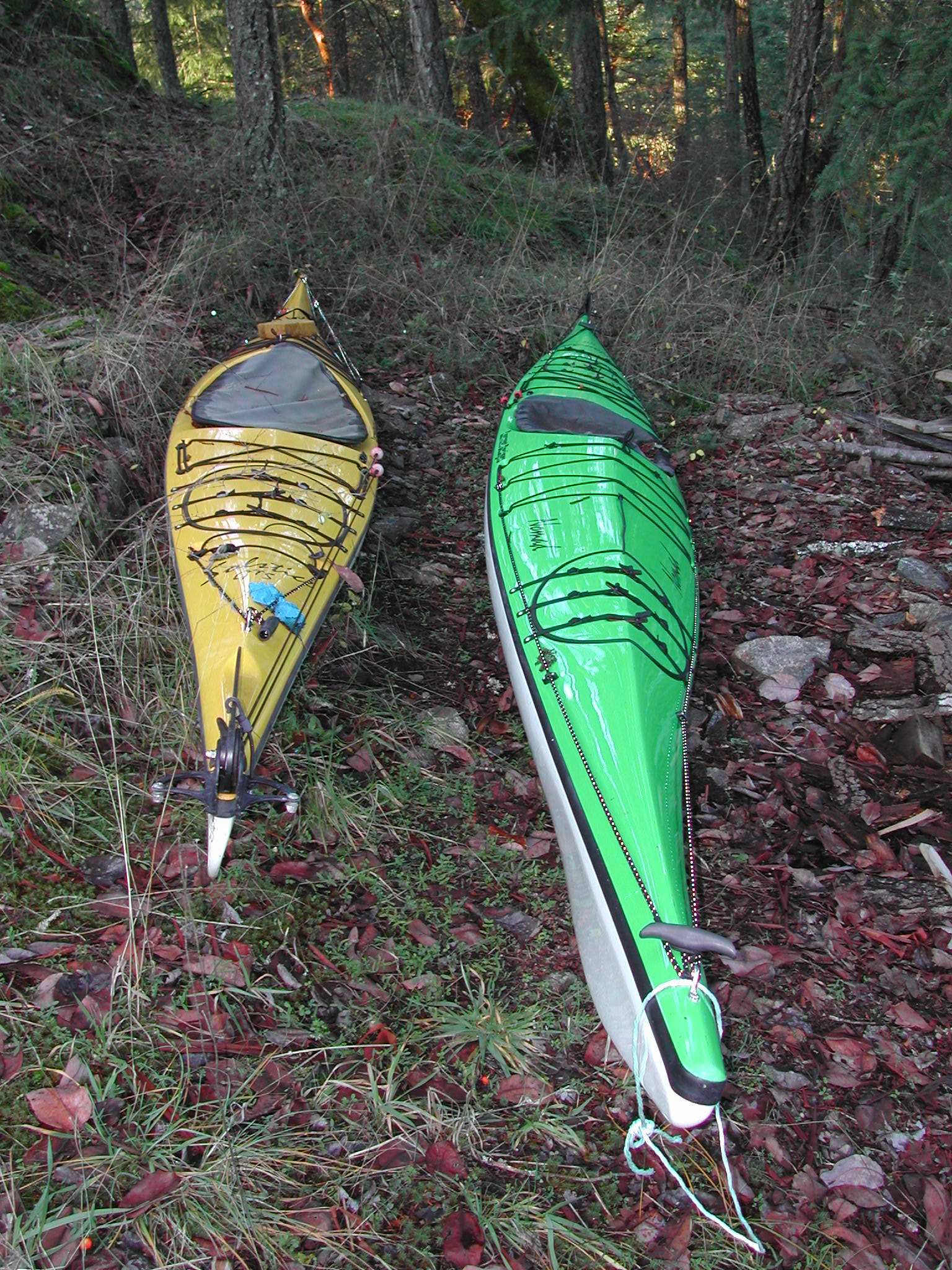
our boats

Spray Skirt: Anyone have a 100% neoprene sprayskirt to sell. Needs to firmly attach Ann to her solstice kayak…although she has been quite moody lately and I may just drown her.

June has been a very busy month.
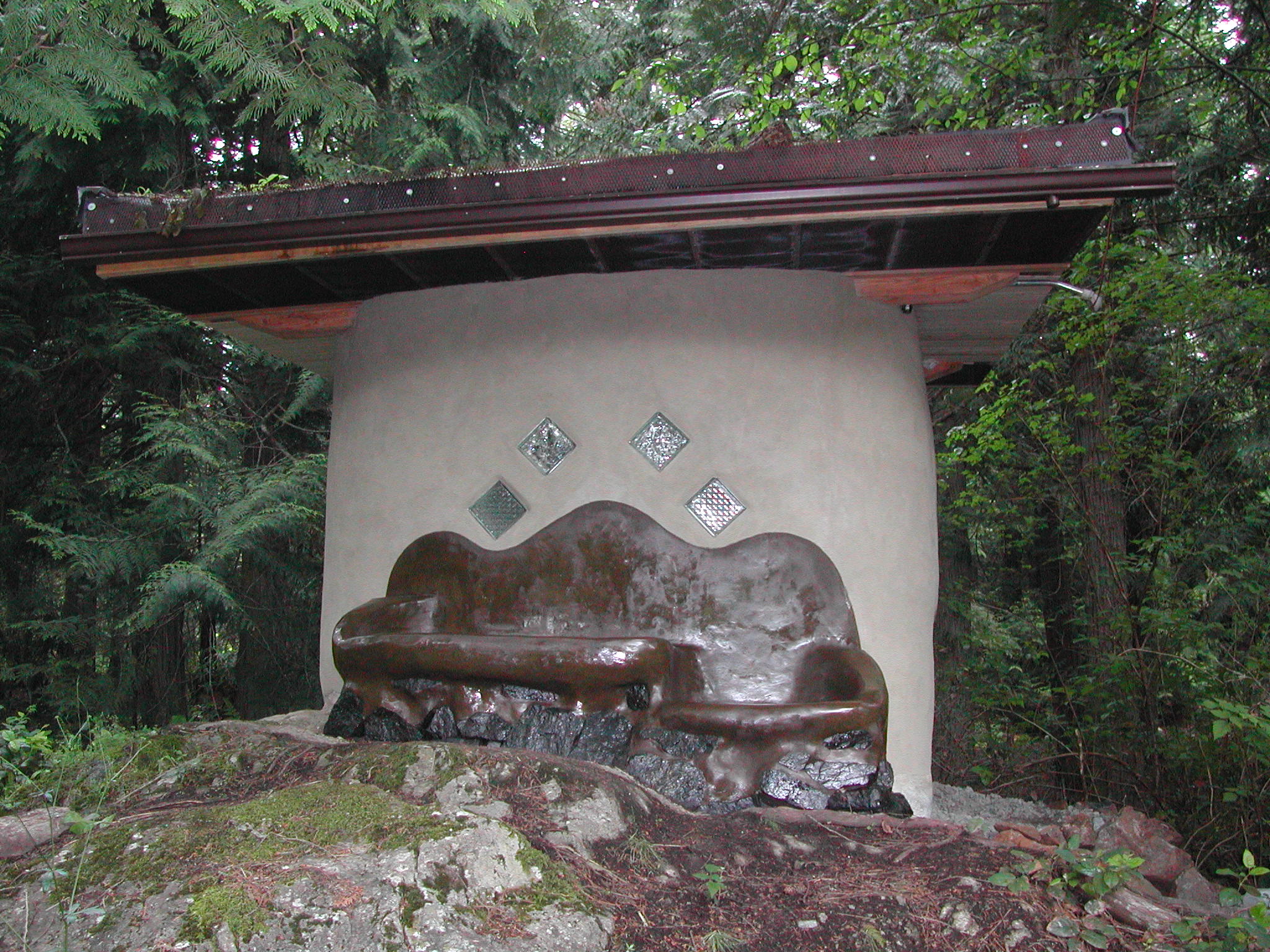
Cob Bathroom:
The wet spring has slowed down completion of the cob bathroom, but it is almost done and looking great.  Check out photo on our blog.  https://ecosenseliving.wordpress.com/
Cascadia/Vancity Research Project:  Vancity Grant details
Gord has put in long hours researching equipment, reading manuals, installing sensors, setting up dedicated laptops, installing dataloggers, setting up software, and exploring research options.  We would like to thank Christina Goodvin (mechanical engineer) for all her engineering help through this process, especially with the solar thermal side of the research.  Check out this link to see some data and graphs.  Hobolink
The KD2Pro Thermal Properties Analyzer is also giving some good solid data for the mass wall system.  R-Value for the pumice cob wall is coming in at 0.93 per inch or for our 22 inch walls this means R-20.43 with a standard deviation of 0.013.  This data came from 27 tests of one drilled hole.  Now we need to do this 24 more times to make sure that the testing is bullet proof and statistically significant.   For the first time in our post university lives our statistics courses are proving useful.
Let the experimentation begin.  We are going to make up all kinds of new cob/plaster samples and do the thermal properties testing on them.  Way too much fun for us geeky energy nerds.
All of this is keeping us quite busy as we digest all the goings on in the world.  Here are a few links we found interesting these past couple of months.
http://vimeo.com/11859670 Video link to Charles Eisenstein
http://vimeo.com/10635494 Video link to Vandana Shiva
Link to Environment Canada on the Warmest Spring in Canadian History since records began http://www.ec.gc.ca/adsc-cmda/default.asp?lang=En&n=4CC724DA-1
and finally to depress everyone, the oil spill in the gulf is small potatoes compared to what has been happening off the Nigerian coast.  http://www.guardian.co.uk/world/2010/may/30/oil-spills-nigeria-niger-delta-shell
Ann and Gord

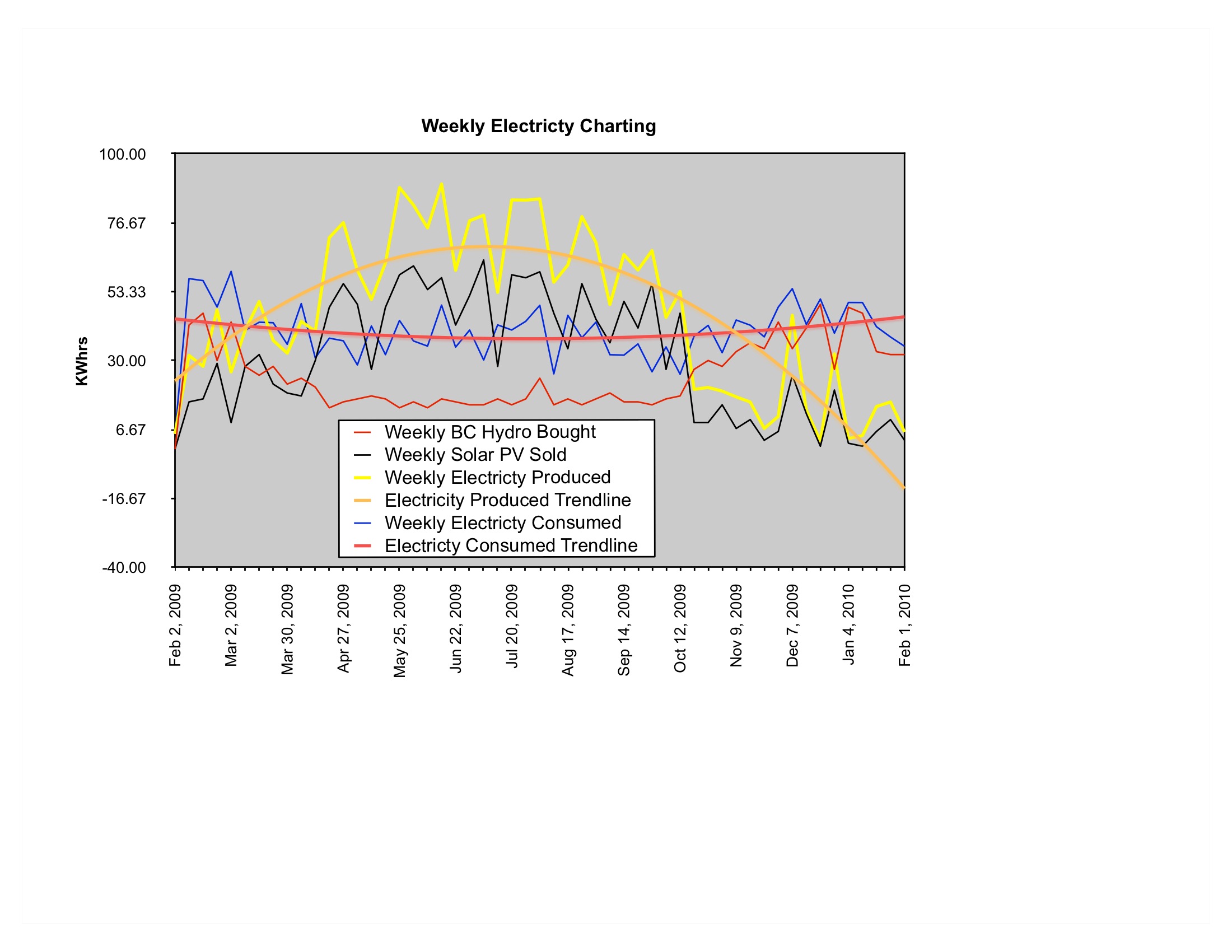
Electricity Graphs (1 year ended Jan 31, 2010)


Humanure: Used in food gardening


Check out page 15 of this “BC Organic Grower, Winter 2010.”  Seems that the compost tested at UBC was just fine for use in organic growing but was a bit lacking in N and P.  Our compost would be better as the style of composting collects and retains the N and we also add all the kitchen scraps which includes a few bones (adds P).

Read More  Use of Humanure on the Organic Farm